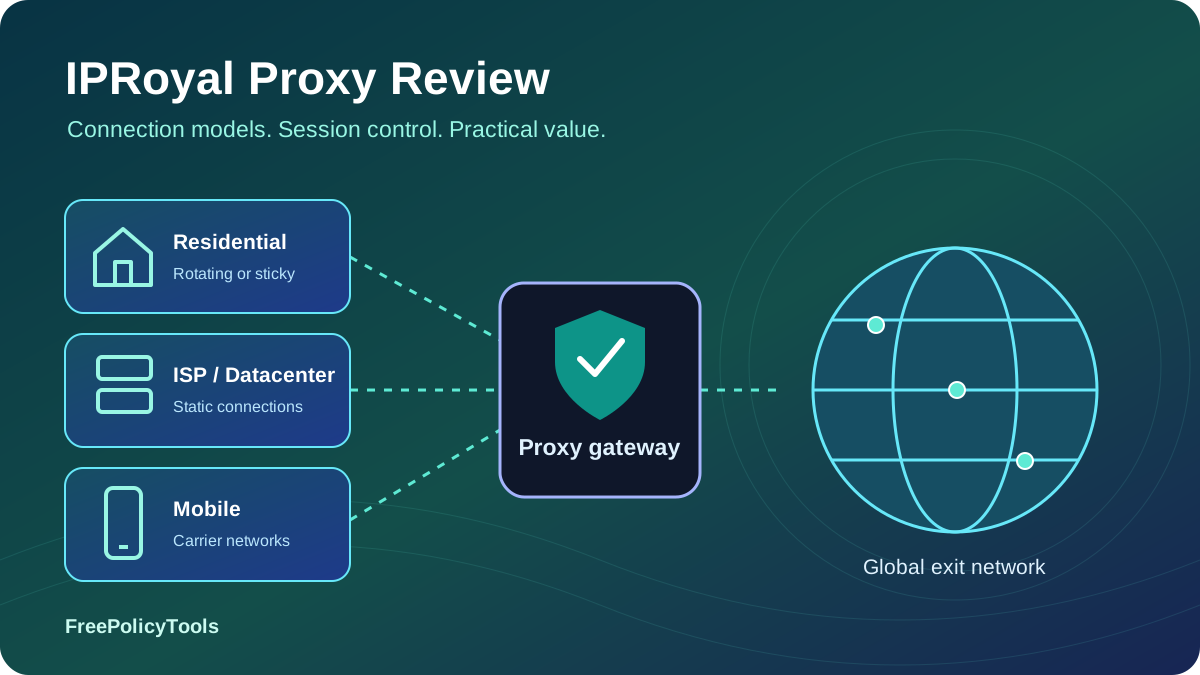
IPRoyal’s strongest practical selling point is non-expiring residential traffic. If you collect public prices, check localized pages or run research in bursts, keeping unused bandwidth can matter more than a low headline price. Its broader catalog also gives you static ISP IPs, dedicated datacenter connections, rotating mobile traffic and dedicated mobile rentals. Each product solves a different problem and comes with different billing rules.
This detailed IPRoyal proxy review examines the published offers, configuration controls, access policies and purchase conditions checked October 4, 2026. We have not purchased these plans or run controlled network benchmarks. The charts therefore show documented prices and explicit arithmetic, rather than invented latency, throughput or website-success scores. The decision is whether the product and usable-data cost fit your actual workload.
Our quick recommendation
Shortlist IPRoyal for irregular residential consumption and for teams that want several proxy types in one catalog. Compare alternatives carefully for cheap recurring bandwidth, exact carrier inventory or managed data extraction. A small pilot is more useful than buying a large package based on the advertised network size.
Explore IPRoyal plans1. What Is IPRoyal, and Who Is It Best For?
A broad proxy catalog with flexible residential purchasing
IPRoyal sells access to exit IPs that your configured application uses to reach websites. Rotating residential access draws from household connections, while static products give you a more persistent endpoint. Mobile products use carrier connectivity. Web Unblocker adds a managed request layer, so it should be evaluated as a separate product rather than an ordinary IP list.
The current residential product page advertises 64M+ IPs across 195+ countries. This describes the provider’s network, not the number of online IPs available in a particular city at the moment you connect. A large cumulative pool cannot establish local stock, exclusive access or acceptance by your target site. Source: IPRoyal residential product details.
Occasional scraping
Traffic can remain available between jobs.
Regional QA
Choose an exit location and validate what the page returns.
Persistent sessions
Evaluate static ISP instead of assuming rotation suits every task.
2. Proxy Types: Choose the Connection Before the Price
Buying the wrong connection model is an easy way to waste a seemingly cheap plan. The useful distinctions are where the exit IP comes from, how long you can keep it, whether it is shared, and whether you pay for data or elapsed time. “Sneaker proxy” is a use-case description; this review uses the current core catalog rather than treating it as a separate network technology.
| Product | Connection model | Billing unit | Best starting use case | Main limitation |
|---|---|---|---|---|
| Rotating residential | Household exit pool; shared access | GB purchased | Localized research, price collection, ad checks | Exit availability and reputation vary |
| ISP / static residential | ISP-registered static IP; choose dedicated or shared SKU | IP and purchased term | Authorized sessions needing continuity | Traffic fair use and term expiry |
| Datacenter | Hosted IPv4 addresses; dedicated offering | IP and purchased term | Permitted bulk requests on tolerant targets | Hosting IPs can be easier to identify |
| Rotating mobile | Shared carrier-network exits | GB purchased | Mobile-network QA and regional ad checks | Carrier and location availability vary |
| Dedicated mobile | Dedicated device/SIM rental model | Day or longer term | Sustained mobile workflows | Rental cost and carrier conditions |
| Web Unblocker | Managed IP/header selection and retries | Requests | Targets needing managed request handling | Response validity and target support still need testing |
Residential and ISP are not interchangeable
A household residential exit can disappear when the contributing device disconnects. An ISP proxy is typically hosted infrastructure using ISP-registered address space. That can suit persistence, but it does not reproduce every signal of a household browser. For an authorized account session, IP continuity, cookies and normal application behavior all matter. Repeated rotation during one session can make a workflow less reliable.
Shared access versus a dedicated order
IPRoyal’s private-or-shared help article identifies residential and rotating mobile as shared. Some residential marketing uses “dedicated” wording, so confirm exclusivity for the exact purchase. Dedicated ISP/datacenter/mobile products exist, and the provider separately documents a shared ISP option. A sticky session is a session setting, not proof that nobody else can use that address. Our proxy rotation and session guide explains how rotating exits differ from keeping a sticky session.
If carrier access is your priority, our mobile proxy comparison explains why a GB package and a dedicated device rental need separate cost calculations.
Specialized APIs and enterprise plans
The current catalog also lists a Video Scraper API for YouTube content, with access requested separately. Its public FAQ says live video streams are not supported. Treat this as a specialized collection product: confirm access, pricing, output and content permissions independently of a proxy package. Enterprise plans similarly need a scope-specific quote rather than an assumed extension of the self-service rates.
3. Technical Features: Targeting, Rotation and Authentication
Country, state and city targeting
Residential settings support geographic selection. Fine targeting narrows the eligible pool, so verify the actual exit location and useful content rather than assuming every advertised city is always stocked.
Rotating or sticky sessions
Current residential documentation advertises per-request changes or sticky sessions up to seven days. Treat the requested duration as a maximum setting, with continuity dependent on the exit remaining available.
Two authentication approaches
Residential documentation lists username/password access and IP whitelisting. Whitelisting suits a stable server egress address; credentials are more portable when the caller’s public IP changes.
HTTP(S), SOCKS5 and API controls
Choose a protocol supported by your client. Residential API access can support account management and sub-users. Management API credentials and proxy authentication are different secrets.
Feature source: IPRoyal residential documentation. Settings and availability must be checked for each product.
Unlimited concurrency is not unlimited successful throughput
An absence of a published session-count cap does not mean every additional worker will improve output. Target rate limits, local CPU, connection reuse, retries and geographic inventory still constrain a job. Begin with modest parallelism, observe useful responses and increase gradually. A workload that retrieves large assets may exhaust a GB balance while producing relatively few records.
Rotation does not replace a session strategy
For independent public-page fetches, new exits can distribute requests. For a multi-step form or permitted authenticated workflow, keep session identifiers and cookies consistent and choose a persistence model deliberately. When an exit changes, detect the event and recover cleanly. Neither residential nor mobile access guarantees that an application will ignore its usual security checks.
4. IPRoyal Pricing: Rates, Package Totals and Fair Use
The tables below use USD prices shown on official public pages on October 4, 2026. Taxes, selected locations, quantities and account offers can change the amount due. A subscription discount adds recurring billing; a lower price on a longer static-proxy term is not a shorter-term offer. Confirm the complete payment and renewal settings before ordering.
Residential pay-as-you-go versus subscription
| Purchased traffic | PAYG / GB | PAYG total | Subscription / GB | Subscription allocation cost |
|---|---|---|---|---|
| 1GB | $7.35 | $7.35 | $7.00 | $7.00 |
| 2GB | $6.25 | $12.50 | $5.95 | $11.90 |
| 10GB | $5.51 | $55.10 | $5.25 | $52.50 |
Official residential pricing lists the two purchasing modes separately. The $1.75/GB headline requires a 10TB subscription allocation; the corresponding bulk PAYG headline is $1.84/GB. Neither is a small-order rate.
For a sporadic project, the purchase model is as important as the rate. Non-expiring residential bandwidth gives you time to finish multiple jobs without a monthly use-it-or-lose-it deadline. For predictable recurring work, a subscription may reduce the unit cost, but check cancellation and replenishment behavior. Buying extra traffic only to obtain a lower unit rate still ties up cash you may never use.
ISP and datacenter price headlines
| Product | 24 hours | 30 days | 60-day offer | 90-day offer |
|---|---|---|---|---|
| ISP | From $1.80 / IP | From $2.70 / IP | Displayed from $2.55 / IP | Displayed from $2.40 / IP |
| Datacenter | No day offer in reviewed grid | From $1.57 / IP | Displayed from $1.48 / IP | Displayed from $1.39 / IP |
Sources: ISP pricing and datacenter pricing. Review the full selected term and quantity in the order summary; do not assume a longer-term rate buys the whole term for that amount.
The traffic allowance behind “unlimited”
The current fair-use policy provides 100GB per ISP or datacenter proxy per 30-day cycle, pooled across the order. Five proxies therefore contribute 500GB, even if usage is uneven between them. After the pooled allowance is reached, dedicated versions continue at reduced speed; shared versions lose access.
The provider notifies customers at 85% usage and offers additional data. Top-ups apply to the order’s proxy count and expire with the current cycle. Budget for them if sustained full-speed transfer matters. These conditions are different from residential traffic that never expires.
Mobile pricing: separate GB packages from rentals
| Traffic | Price / GB | Calculated package cost | Billing model |
|---|---|---|---|
| 2GB | $6.80 | $13.60 | Metered rotating mobile |
| 10GB | $6.00 | $60.00 | Metered rotating mobile |
| 50GB | $5.60 | $280.00 | Metered rotating mobile |
| 100GB | $5.20 | $520.00 | Metered rotating mobile |
The mobile pricing page separately lists dedicated rentals from $10.11 for 24 hours and $130 for 30 days. Longer offers show $123.50/month for 60 days and $117/month for 90 days. Those monthly equivalents imply $247 and $351 over the respective terms at the displayed rate, before order adjustments. Do not apply dedicated-product “unlimited” wording to GB packages, or residential expiry rules to mobile traffic.
Web Unblocker: a request-based product
The Web Unblocker pricing grid lists 1,000 requests at $1/1,000, 5,000 at $0.90/1,000, 50,000 at $0.80/1,000 and 100,000 at $0.70/1,000. Arithmetic totals are $1, $4.50, $40 and $70 respectively. It advertises managed retries, IP selection and CAPTCHA handling. Confirm supported targets, request accounting, rendering options and credit validity before comparing it with a raw residential GB plan.
Review the selected IPRoyal offer5. Price Charts: What Your Purchased Bandwidth Actually Costs
These visuals compare prices within one product or illustrate a stated workload. They do not measure network performance. Keep the package volume and purchase mode visible: a rate attached to a large commitment is not interchangeable with a one-GB pilot.
Residential PAYG unit prices
USD/GB, axis from $0 to $8; package sizes differ.
Small residential package totals
USD, zero baseline; blue = PAYG, green = subscription.
Illustrative 10GB workload split
7GB useful responses
3GB retries/unusable output
At $55.10 for 10GB PAYG, the effective cost is $7.87 per useful GB: $55.10 ÷ 7.
Estimate traffic before choosing a package
Using decimal units, 10,000 requests transferring 1MB each produce about 10GB. Add 20% more equal-size requests for retries and the estimate becomes 12GB. Browser assets, redirects, uploads and transfer accounting can add more.
Blocking unnecessary assets in a browser job may reduce spend, but validate that the target still loads and your extracted values remain correct. Track bytes per accepted record so your estimate reflects actual output.
Non-expiry helps when demand arrives irregularly; it does not make every unused balance good value. If you only need 1GB, buying 10GB leaves most of your payment committed to future work. For a broader purchase comparison, see our cheapest proxy providers guide, which separates bundle sizes and validity periods.
6. Performance: Published Claims and What to Test Yourself
IPRoyal advertises a 99.4% residential success rate and roughly 0.5-second response time on its residential product page. These are provider-reported figures. Without a matched target list, locations, concurrency, response-validation rules and time window, they cannot predict your job’s results. This review has no measured Mbps, latency or target-success ranking to substitute for that evidence.
| Metric | How to measure | Why it changes the decision |
|---|---|---|
| Useful-result rate | Count complete, correct target records; exclude challenges and empty pages | HTTP 200 alone can overstate success |
| Median and p95 latency | Record complete-request duration across repeated runs | Long-tail delays can dominate job completion |
| Bytes per accepted record | Divide transferred bytes by validated output count | Connects a GB price to real collection cost |
| Session continuity | Observe exit IP, cookie state and workflow completion | Tests whether your requested persistence works |
| Location accuracy | Check exit geography and the actual localized page output | IP lookup databases and website localization can disagree |
| Retry overhead | Track retry count, status and additional bytes | Makes blocked or unstable targets visible in the budget |
A practical comparison procedure
- Choose a representative set of permitted URLs, including a simple page, a typical production page and a page that needs session state. Define required fields before sending requests.
- Keep the client region, protocol, timeout, geographic selection and request schedule consistent. Separate browser-rendered tasks from simple HTTP fetches.
- Start with a small number of workers and repeat at more than one time of day. Record every attempt, including errors and retries, rather than keeping only successful responses.
- Increase concurrency gradually while observing rate-limit responses, latency and valid output. Stop scaling when cost rises faster than accepted results.
- Compare total spend per accepted record and the frequency of interrupted sessions. Choose the cheapest product that meets your quality and continuity requirements.
Datacenter is often a sensible first experiment for a tolerant public target because hosted connections avoid household-device availability changes. Residential or mobile may help when the target behaves differently for those networks, but a more expensive exit does not automatically improve parsing or eliminate blocks. A managed product can reduce engineering work if it handles your exact target well; include its fee and your remaining parsing work in the comparison.
7. Dashboard, Setup and Day-to-Day Operation
Public documentation describes self-service purchasing, traffic balances, formatted proxy lists and order management. The provider’s Q3 product update also documents product-level Proxy Access and ISP/datacenter usage reports with export options. These are documented capabilities; we have not evaluated the authenticated dashboard or timed a first-time setup. For a desktop configuration, follow our Windows and Mac proxy setup guide and verify which applications actually use the configured proxy.
From purchase to a working client
- Choose the right product and location. Establish whether you need a rotating exit pool, a static IP, a carrier connection or managed requests. Review inventory and the complete order total.
- Complete required verification. Check target ports and any account restrictions before assuming the connection will support your application.
- Copy the endpoint from the dashboard. Use the current host, port and supported authentication format. For residential access, configure geography and session behavior before generating the list.
- Connect from one application first. Set the protocol and credentials in your HTTP client, browser extension or automation framework. A Windows or browser setting may not route every program.
- Verify the route and response. Confirm the exit location on a trusted endpoint, then request a permitted target and validate its expected content. Check the traffic balance after a small test.
- Add operational controls. Set application-level spend limits, timeouts, bounded retries and per-target concurrency. Monitor order expiry and rotate exposed credentials.
Keep proxy credentials out of the browser bundle
For a web application, store provider secrets on your server and make controlled requests there. Client-side JavaScript exposes credentials to visitors, and browser networking does not provide a general-purpose proxy configuration for each fetch call. Restrict backend destinations and traffic so an application feature cannot become an open relay.
| Symptom | Check first | Next step |
|---|---|---|
| 407 / authentication failure | Credentials, protocol and whitelist egress IP | Regenerate the correct format; verify account access |
| Timeout or connection refusal | Host/port, local firewall, target port approval and remaining service | Try a basic permitted HTTPS endpoint before the target |
| 403, 429 or challenge page | Target policy, request rate, session consistency and response body | Reduce concurrency and validate allowed access; do not retry endlessly |
| Wrong localized output | Exit geography, cookies, account region and language | Test a fresh permitted session with explicit localization settings |
| Slow static-proxy order | Pooled fair-use balance and order expiry | Review usage before changing infrastructure |
The provider’s proxy-list help guide describes copying or downloading active proxies and checking expiration dates. Exported lists contain access details; handle them as secrets, not as ordinary screenshots to share with a contractor.
8. Security, IP Sourcing and Access Restrictions
Sourcing requires evidence
IPRoyal publishes residential sourcing information and describes a consent-based partner network. Its disclosures identify Pawns.app and established IP service partnerships. Treat this as the company’s stated process, rather than an independent audit of every contributing device. For procurement, request the current consent, removal and partner-control documentation.
A proxy is one part of privacy
An exit IP changes the network address observed by a target. It does not remove cookies, account identity or browser fingerprints. Keep HTTPS certificate validation enabled, protect credentials and avoid equating SOCKS5 with encryption. Routing scope depends on how the application is configured. Check HTTP versus SOCKS proxies before assuming an endpoint supports the protocol or DNS behavior your application needs.
For the underlying connection model, MDN’s proxy servers and tunneling guide explains intermediaries and HTTP tunnels. If your priority is protecting all device traffic through a consumer VPN application, compare that requirement separately rather than assuming a proxy list has the same behavior. Our proxy server explainer provides the request-flow background for interpreting the product claims in this comparison.
KYC and port access can affect your integration
The IPRoyal KYC policy describes checks at registration, purchase and after purchase, with identity verification enabling unrestricted features. The Q3 update states that standard web ports 80 and 443 remain available for residential and rotating mobile customers; additional ports depend on verification or support review. SOCKS5 compatibility therefore does not establish unrestricted access to every destination port.
The sourcing page says monitoring is limited to targets accessed through its pool. Together with the KYC disclosures, this means a general “no logging” marketing line should not be treated as a blanket statement that no account or operational information is processed. For sensitive work, review the privacy policy, data-processing terms, retention commitments and the information your own logs store. Keep collection scoped to the data you actually need.
Proxy access does not grant permission to collect data
Check a target’s documented API, terms and automated-access expectations before collecting public data. The IETF Robots Exclusion Protocol standard, RFC 9309, defines how robots.txt communicates crawler preferences; it is not access authorization. Use reasonable request rates and minimize personal data. Buying an IP changes routing, not the scope of the permission you have.
9. Customer Support, Trials and Refund Conditions
IPRoyal advertises round-the-clock support and maintains public product, billing and integration guides. That is useful when you need help choosing a product or correcting endpoint settings, but it is not a measured response-time guarantee. We have not submitted tickets or verified a numerical resolution time. Before ordering, ask a specific question about your target, location, desired session length and expected traffic so the answer helps validate the purchase.
Do not build a purchasing decision around an assumed free trial
Trial arrangements can depend on product and eligibility. A free account or proxy-checking tool is not free residential bandwidth. Ask about a trial for the exact SKU; if no applicable offer is available, choose a small paid allocation that is sufficient for a representative pilot. A larger pilot may use enough data to change refund eligibility.
Residential refunds have narrow conditions
The current residential refund policy says unresolved connectivity or service problems may qualify, with a request submitted within 24 hours of purchase. It excludes plans with more than 100MB consumed. Subscription charges have a separate 72-hour request window with none of the newly allocated data used; manual renewals require a request within 24 hours and no newly allocated data consumed.
The same policy says cryptocurrency payments cannot be refunded to the original payment method and allows exceptional decisions at the provider’s discretion. These conditions do not amount to an unconditional satisfaction guarantee. Product policies can differ, so review the one for ISP, datacenter or mobile before buying those services. Contact support promptly with the order ID and a redacted connection example if the service is not usable.
Questions worth asking before a larger order
Is the required location in stock? Is this shared or dedicated? Which target ports are approved? What happens when a sticky exit disappears? How are failed requests and transferred bytes billed? What expires, what renews automatically, and which refund rules apply to this exact order?
10. IPRoyal vs Webshare, Oxylabs and Bright Data
IPRoyal’s non-expiring residential credit is a useful differentiator, but the surrounding market offers different entry costs and tooling. The following comparison uses product positioning and documented billing models. It is not a ranking based on measured speed, success or uptime, and a provider’s raw proxies should be compared separately from its managed scraping services.
| Provider | Why consider it | Billing consideration | Read the detailed comparison |
|---|---|---|---|
| IPRoyal | Non-expiring residential traffic; multiple connection models | PAYG or recurring residential allocations; static and mobile rules differ | Pricing details above |
| Webshare | Self-service proxy lists and low-cost datacenter entry | Separate free datacenter allowance from paid residential traffic | IPRoyal vs Webshare |
| Oxylabs | Enterprise procurement and managed scraping API options | Proxy packages and managed API units need separate budgets | IPRoyal vs Oxylabs |
| Bright Data | Broad targeting and managed data collection toolkit | Promotions, KYC and product-specific billing require review | IPRoyal vs Bright Data |
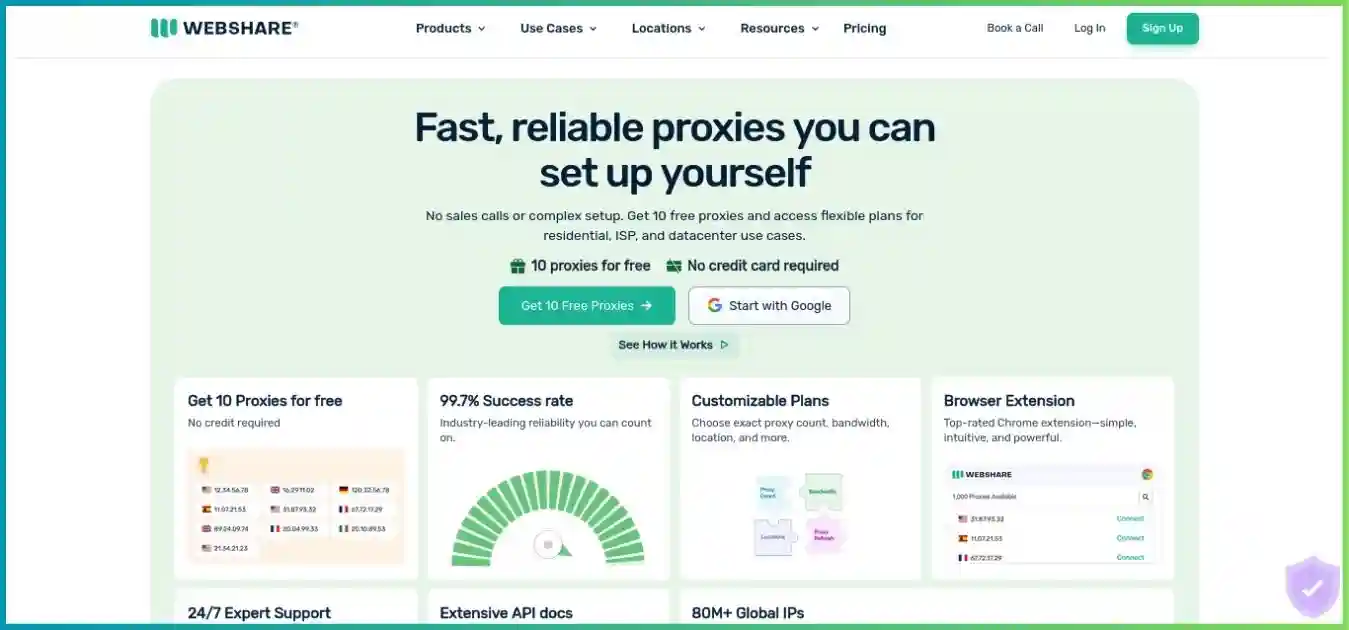
Webshare
A useful comparison for self-service lists and inexpensive datacenter experiments. Check the selected residential package and its validity before comparing it with retained IPRoyal credit.
Read the detailed guide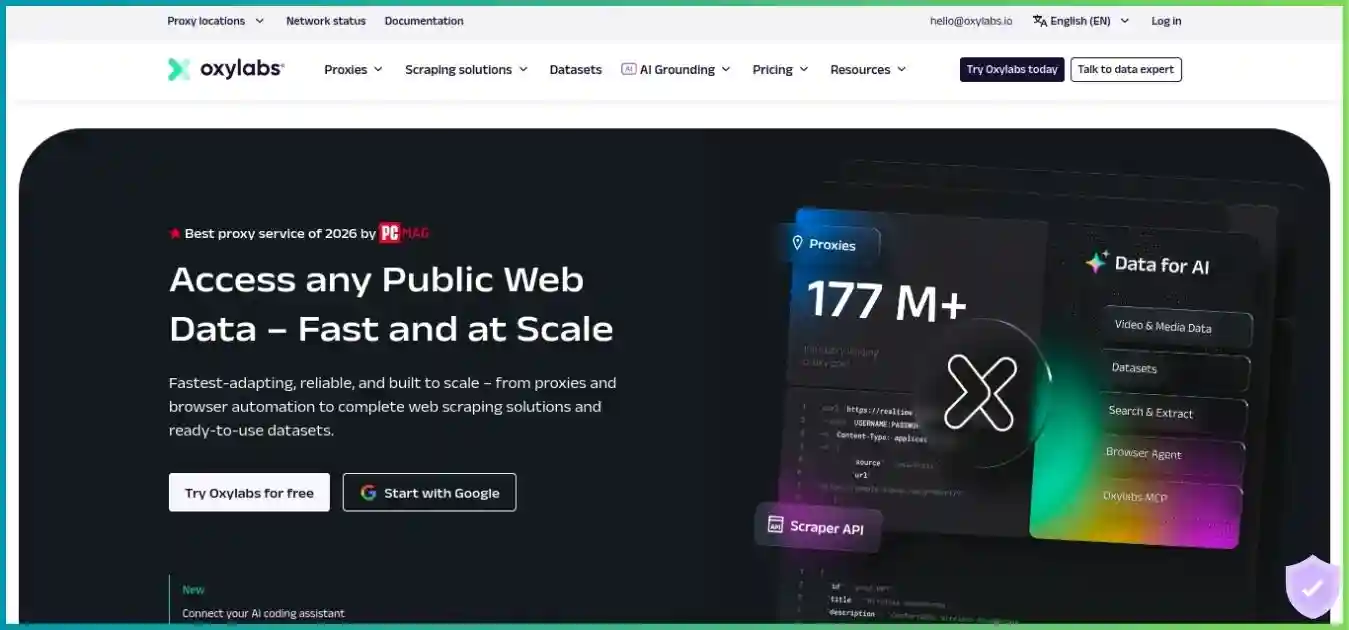
Oxylabs
Evaluate when procurement, documentation and managed collection tools matter. Decide whether you need raw proxy access or a scraping API before comparing bills.
Read the detailed guide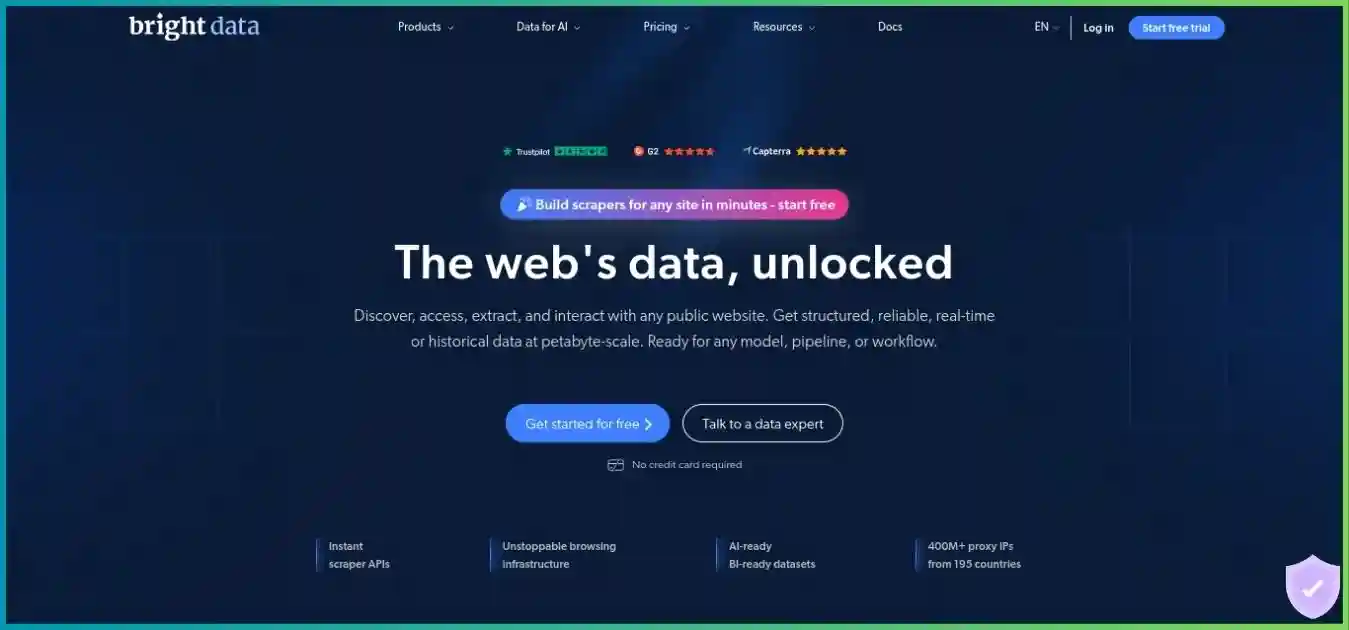
Bright Data
Consider for a wider data collection toolkit and targeting requirements. Check account verification and distinguish promotional prices from ongoing product costs.
Read the detailed guideFor a related comparison between the enterprise-oriented alternatives, keep our Bright Data vs Oxylabs guide alongside your shortlist. Homepage images illustrate the providers; they do not establish current pricing or independently verified performance.
11. Which IPRoyal Product Fits Your Workload?
Occasional public-price monitoring
Start with a small residential PAYG allocation when jobs are separated by weeks. Measure complete price and currency output, and retain unused traffic for the next run. Try datacenter first if the permitted target accepts it.
Localized advertising and page QA
Select the required geography, then validate actual page content and campaign delivery. Mobile access is relevant if carrier-specific behavior is what you need to test; an exit IP does not emulate a phone’s operating system or browser.
Authorized account workflows
Consider dedicated static ISP when continuity matters. Preserve normal cookies and application sessions. A persistent address cannot override a platform’s limits or permission requirements.
Large scheduled collection jobs
Estimate bytes and retries before choosing rotating residential. For static plans, include the pooled fair-use allowance and top-ups. Compare a managed request service if maintaining target-specific handling consumes significant engineering time.
Development and staging
Use a small static or rotating allocation to check proxy-aware application behavior. Test timeout recovery, authentication errors, regional output and secret handling before introducing the route into production.
Heavy sustained mobile use
Compare a dedicated rental against expected GB usage over the same duration. Confirm carrier, coverage, rotation behavior and rental conditions. A day rental is not a substitute for a monthly budget estimate.
IPRoyal is a weaker fit if your only requirement is the lowest price for a large recurring residential allowance, if you need a guaranteed IP in a very narrow location without inventory confirmation, or if you expect raw proxy access to return clean structured data automatically. Decide which constraint is essential and test that first.
12. IPRoyal Advantages and Limitations
Advantages
- Purchased residential traffic stays available between jobs.
- Small residential allocations allow a limited initial commitment.
- Residential, ISP, datacenter and mobile models cover different workflows.
- Residential settings include geography, session control and multiple protocols.
- Public pricing and help documentation expose important purchase conditions.
- Web Unblocker adds a managed alternative to raw proxy routing.
Limitations
- Small residential PAYG purchases have higher unit prices than the bulk headline.
- ISP/datacenter traffic has a pooled fair-use allowance and top-up conditions.
- Shared residential exits do not provide permanent exclusive IP ownership.
- Location inventory and sticky continuity can change with network availability.
- Identity verification and approved-port rules can affect an integration.
- Refund conditions are narrow; no controlled performance evidence is presented here.
13. Frequently Asked Questions
14. Research Method and Sources
How this review was prepared
We reviewed IPRoyal’s public residential, ISP, datacenter, mobile and Web Unblocker product/pricing pages, technical documentation, fair-use policy, residential refund conditions, KYC material and Q3 product update on October 4, 2026. Contextual source links appear beside the relevant claims. The sourcing description follows the provider’s published disclosures; it is not a device-level sourcing audit. Compare residential versus datacenter proxies when weighing IP origin, sourcing, consistency and cost.
The verdict prioritizes billing clarity, traffic validity, connection-model fit and operational constraints. Package totals are calculated from displayed rates. Charts use published residential prices or explicitly hypothetical traffic. Network size and marketing success figures remain attributed to IPRoyal; they are not our measurements.
We did not run paid-account checkout tests, speed or target-success benchmarks, live inventory checks, support response tests or an authenticated dashboard review. Confirm the specific SKU, selected term, total payment, renewal and policy at purchase, then use a representative pilot to assess your own results.
15. Final Verdict: A Useful Option for Irregular Proxy Demand
IPRoyal deserves a place on a shortlist when residential usage is intermittent and retaining bandwidth is valuable. Its multiple proxy models also make it practical to compare a rotating household route with a static ISP endpoint or mobile connection without assuming one technology suits every task. That flexibility is the case for trying it.
The strongest buying decision starts with a small, representative workload. Check the actual local inventory, useful-response rate, session behavior and cost per accepted record. Include fair-use top-ups for static products and recurring charges for subscriptions. Expand only when the product meets your requirements at a total cost you can justify.
Start With the Proxy Model Your Project Needs
Choose the location, session behavior and purchase size that fit your workload. Confirm the complete order and refund terms before committing to more traffic.
Explore IPRoyal and choose a pilot plan