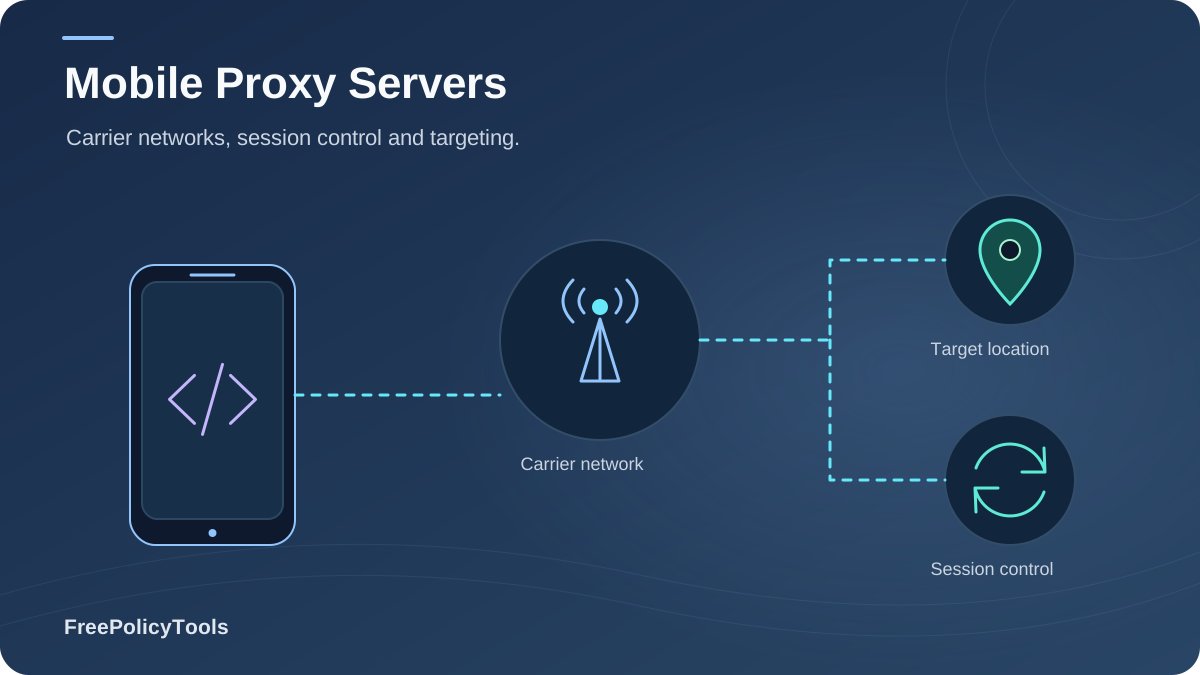
A mobile proxy routes requests through an address assigned to a cellular carrier. That can help authorized app testing, regional ad verification and public-data collection when the target experience depends on a mobile network. The best mobile proxy server depends on the carrier and location you need, how long an IP must stay stable, and whether a per-GB pool or a dedicated endpoint suits the job. This guide compares Oxylabs, IPRoyal, Novada and Bright Data using current public product terms.
Three starting points for different mobile proxy needs. Prices and eligibility should be confirmed for the exact location and product before purchase.

Oxylabs
A clear 4 GB Starter and larger monthly packages make recurring spend easier to forecast.

IPRoyal
A 2 GB rotating purchase and a separate one-day dedicated option cover different tests.

Novada
A dedicated mobile network plus other proxy routes; confirm the live mobile checkout rate.
Quick comparison: mobile proxy providers
US dollar figures from official public pages reviewed September 30, 2026. The products below have different minimums and billing units.
| Provider | Published mobile entry | Billing | Session choice | Price caveat |
|---|---|---|---|---|
| Oxylabs | $30 / 4 GB monthly | Per-GB package | Rotation; longer static option | VAT may apply |
| IPRoyal | $13.60 / 2 GB rotating | Per GB or dedicated period | Rotating or reserved | Dedicated price is a different unit |
| Novada | From $1.50/GB advertised | Mobile traffic plan | Rotating / sticky advertised | Small-plan total not established |
| Bright Data | Confirm mobile quote | PAYG described in FAQ | Rotation / session controls | No mobile rate on current public grid |
Novada's “from” rate is a headline, not a verified starter tier. Bright Data's current residential coupon is not a mobile rate. A dedicated proxy priced by day is not equivalent to a rotating pool priced by GB.
What a mobile proxy server actually does
How the route works
- Your application connects to a provider gateway.
- The provider chooses a carrier-network exit IP in the requested location.
- The target sees that exit address; rotation or stickiness controls when it changes.
- Your software still manages requests, parsing, retries and storage.
What it does not guarantee
- No IP type guarantees a request will succeed.
- A mobile exit does not turn a desktop browser into a full mobile device.
- A proxy does not automatically encrypt every app on a device.
- It does not grant access rights or override a target’s terms.
Mobile carrier networks often share public addresses among subscribers through carrier-grade NAT. IP rotation may therefore reflect carrier behavior as well as provider controls. A “5G proxy” label describes the network path or pool, not a guaranteed data rate at your destination. The MDN proxy and tunneling guide explains the intermediary role of a proxy in web requests.
Mobile, residential or datacenter?
Use mobile when you need a carrier-origin view, a mobile-specific ad or app experience, or a test showing that other network types fail. Residential routes use household networks; datacenter routes come from hosted infrastructure and are often cheaper. Test the least costly type that meets the actual requirement. See our broader proxy comparison for non-mobile options.
Top 4 mobile proxy providers: detailed reviews
Cards distinguish public prices from claims that still need a checkout or target test. They do not assign unmeasured performance scores.
Oxylabs
Best published plan ladder for recurring mobile traffic
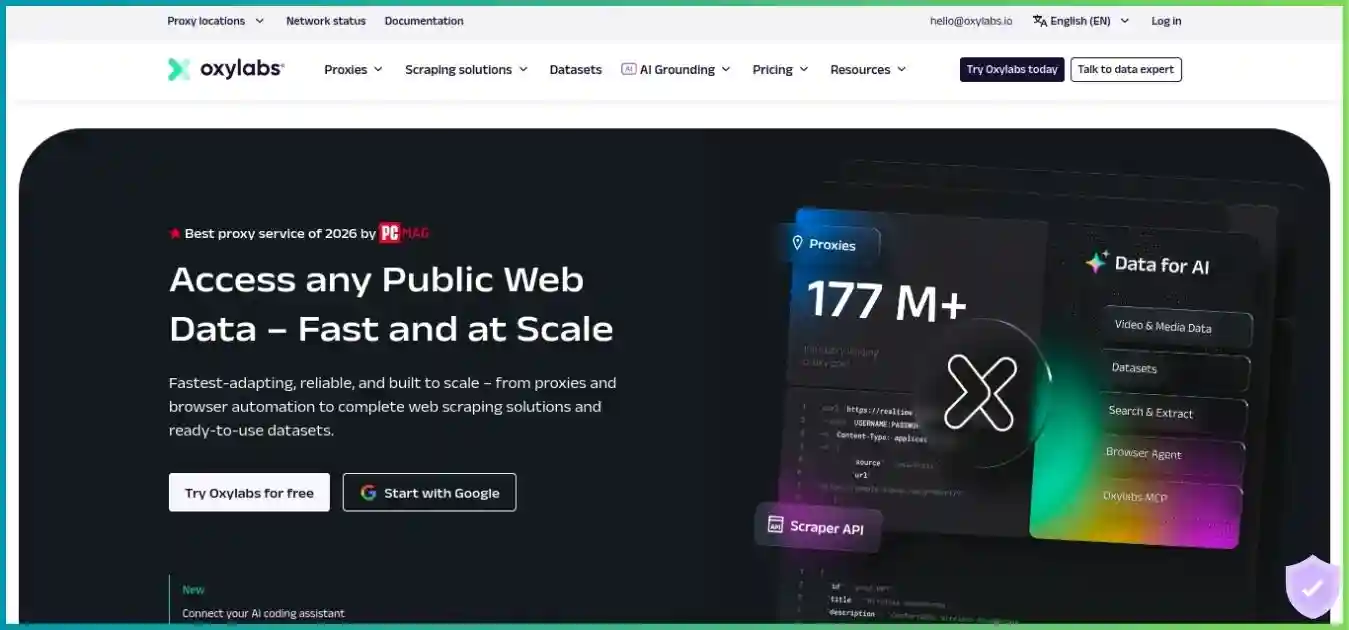
Oxylabs provides the clearest mobile pricing ladder in this group. Its Starter plan is $30 monthly for 4 GB ($7.50/GB); Basic is $100 for 15 GB (about $6.67/GB); Advanced is $500 for 100 GB ($5/GB); Corporate is $2,500 for 715 GB (about $3.50/GB). VAT may apply. The $3.50 figure is a high-volume included rate, not the cost of a small pilot.
The mobile product page advertises real mobile-device IPs, HTTP(S), HTTP/3 and SOCKS5, free geographic targeting, unlimited concurrent sessions and 24/7 support. It also advertises a large carrier pool; availability in a given city or ASN should be checked in the dashboard. Oxylabs is a strong candidate for teams forecasting steady monthly mobile traffic and needing visible tier transitions, but a proxy subscription does not include its separately billed Web Scraper API.
IPRoyal
Best low-commitment rotating or dedicated choice
IPRoyal publishes two distinctly different mobile models. Rotating traffic starts with 2 GB at $6.80/GB ($13.60 total), followed by 10 GB at $6/GB, 50 GB at $5.60/GB and 100 GB at $5.20/GB. Dedicated mobile starts from $10.11 for 24 hours or $130 for 30 days; longer orders show lower monthly equivalents. A dedicated day is not comparable with 2 GB of rotating traffic.
Rotating mobile suits distributed reads and a small initial test. Dedicated access is more relevant when a workflow needs one reserved endpoint and controlled IP changes for a defined period. IPRoyal advertises dashboard/API rotation controls and mobile carrier IPs. Verify country, carrier, bandwidth terms, rotation timing and whether the exact dedicated location is available before purchase. Its residential traffic rules should not be assumed to apply to mobile products.
Novada
Best fit when mobile and other proxy routes may be needed
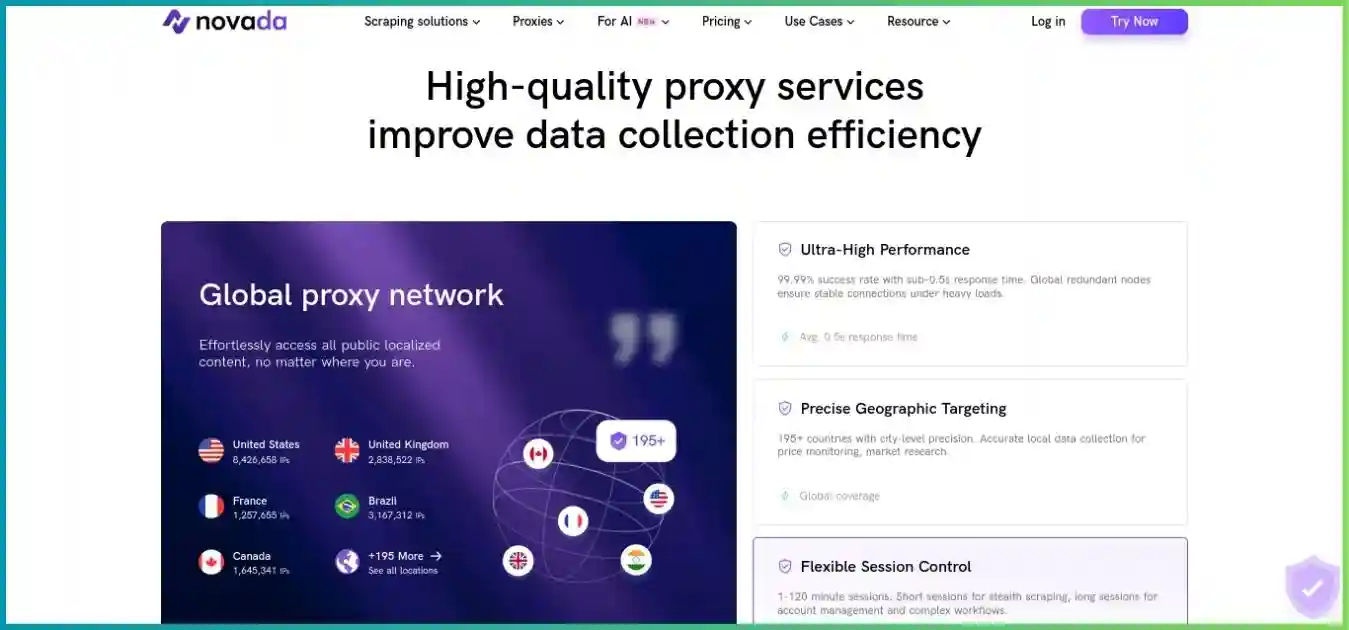
Novada advertises mobile proxies from $1.50/GB on its central pricing page. Its mobile pricing page shows Regular, Enterprise and custom tiers, but the public text does not establish a comparable small-plan price or allowance. The page also shows a large custom starting amount. Treat $1.50 as a starting marketing rate, not a guaranteed one-GB checkout price. This is a suitable provider for the list because Novada has a dedicated mobile product, not merely residential IPs that happen to come from phones.
Novada describes 3G/4G/5G carrier routes, IP rotation, sticky sessions and mobile-specific location options. It advertises two-hour sessions in product copy, but verify the plan and endpoint behavior for your use case. Its mobile traffic is separate from residential proxy packages and from the shared credits used by its managed scraping tools. Ask for the precise country, carrier, minimum purchase, expiry and renewal terms in the account before comparing it with a published small-tier package.
Bright Data
Best for specialized targeting and compliance-led teams
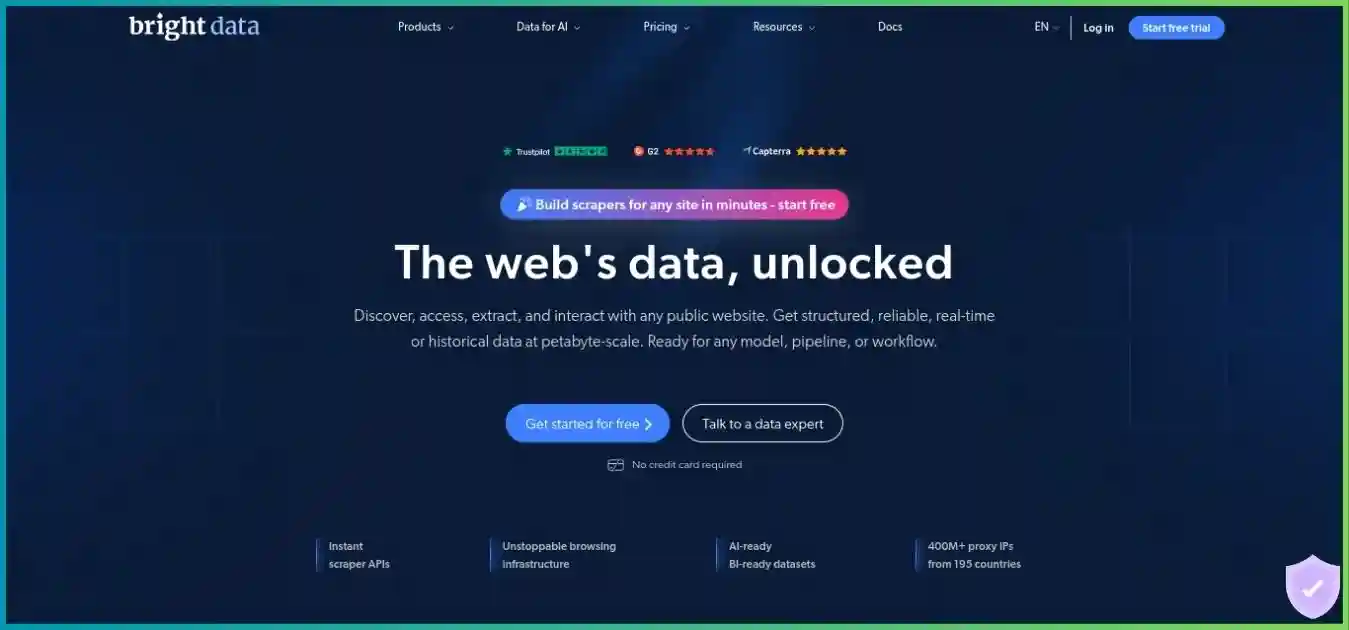
Bright Data still describes a mobile network and a pay-as-you-go option in its proxy pricing FAQ, but the current public pricing grid displays residential, ISP and datacenter tabs rather than a clear mobile price. The old $15/GB mobile figure in this article cannot be supported by that grid and has been removed. Obtain a mobile-specific quote or dashboard rate rather than using a residential promotion such as RESIGB50.
The public FAQ says mobile access can require an identity and use-case review. The platform advertises geographic and ASN selection, Proxy Manager and usage controls, which can matter for regional ad checks and authorized app QA. Its Web Unlocker and Browser API are separate managed products and do not imply mobile proxy traffic is included. For a short pilot, confirm whether a mobile zone can be created, the actual billable unit, available carrier locations and any account minimum.
If a mobile IP is unnecessary: Webshare
Webshare currently documents datacenter, static residential/ISP and rotating residential products. Its free ten-proxy plan is datacenter only. It remains a useful low-cost route for ordinary proxy integration, but should not be compared as a dedicated mobile proxy offer. Read our Webshare review for its actual product lineup.
Explore Webshare alternativesMobile proxy pricing analysis
These charts show published purchase terms and arithmetic, not tested speed, success or coverage.
Clear per-GB mobile package rates
Horizontal bar chart; minimum size and validity differ.
Novada and Bright Data are omitted because a comparable small-tier mobile total was not available in their public text.
Oxylabs published monthly totals
Column chart; each larger column includes a larger traffic allowance, not a price increase for the same volume.
Why retries matter to a GB budget
Hypothetical 10 GB transfer: 7 GB useful responses, 3 GB retries or unusable output. This is a planning example, not measured provider behavior.
7 GB of useful responses
3 GB of retries or unusable output
At a $6/GB package rate, 10 GB costs $60 nominally. If only 7 GB advances the job, spend per useful GB is about $8.57 before parsing and staff time. Record billable traffic and accepted results separately.
A fair quote comparison
Request the same target country and carrier, required sticky duration, expected GB, concurrency, billing period and tax treatment from each vendor. Include the minimum initial payment and any unused balance. Do not compare Novada’s $1.50/GB starting headline or Bright Data’s residential promotion against IPRoyal’s 2 GB checkout total as if they were equivalent orders.
Mobile proxy feature matrix
Availability is product and location dependent. Verify the exact network and plan during a pilot.
| Provider | Mobile network | Billing route | Location/session controls | Buyer check |
|---|---|---|---|---|
| Oxylabs | Carrier-device IPs advertised | 4–715 GB monthly tiers | Geo targeting, rotation, long sessions | VAT, target availability |
| IPRoyal | Carrier IP pool | Rotating GB or dedicated period | Dashboard/API rotation; reserved endpoint | Dedicated bandwidth and location |
| Novada | 3G/4G/5G advertised | Mobile plan; live tier needed | Rotation/sticky, mobile location claims | Minimum, expiry, actual $/GB |
| Bright Data | Mobile zone described | PAYG mentioned; quote needed | Geo/ASN and Proxy Manager controls | KYC and mobile-specific quote |
Where mobile proxies help—and where they do not
Regional ad and app QA
Check a campaign or mobile page from the carrier and city your customers use. Pair the proxy with a real mobile device or emulator if device behavior matters.
Localized public-data checks
Sample a permitted target in each required market. Choose rotation for independent reads and stickiness for short multi-step journeys, then measure field quality.
Account continuity
A dedicated or sticky exit may avoid switching IPs mid-session. Respect the platform’s rules; one IP cannot guarantee account safety or prevent verification.
Research and monitoring
Use carrier-origin traffic only when it changes the data you need. For simple public pages, residential or datacenter traffic may be cheaper.
Scraping rules depend on the site, data and jurisdiction. Follow published access limits and rate guidance. The Robots Exclusion Protocol specification provides context for crawler instructions; it does not replace terms or privacy obligations.
How to set up and evaluate a mobile proxy
1. Define the exact target
List permitted URLs, required country/carrier, response fields, session length and a sensible request rate.
2. Choose rotating or dedicated
Use rotating GB for many independent requests; use a dedicated endpoint if one stable mobile route is essential. Confirm how manual rotation works.
3. Check payment and plan terms
Record the first charge, GB or time allowance, expiration, renewal switch, tax and refund terms. For Novada and Bright Data, obtain the mobile-specific price.
4. Configure safely
Create the product’s credentials or allowlist, select the region, and keep credentials on the server. Test an IP-identification endpoint before the real target.
5. Run a capped sample
Log status, target blocks, bytes, retries, location, carrier, session continuity and accepted fields. Include both easy and difficult pages.
6. Forecast from usable results
Divide total provider and engineering spend by records that pass your checks. Increase volume only when both quality and compliance are stable.
Frequently asked questions
How we compared mobile proxy providers
We reviewed official public mobile product, pricing and documentation pages on September 30, 2026. We compared published entry payments, per-GB versus per-period billing, mobile-specific controls and purchase caveats. Charts use published tiers or explicit arithmetic examples. We did not buy matched plans, independently audit carrier sourcing or run controlled speed, block-rate or support tests. Confirm live checkout, location availability and target performance before committing.
Choose a mobile proxy for the exact job
Check the country, carrier, session length and first payment, then measure usable output from a small permitted test.
Disclosure: FreePolicyTools may earn a commission from sponsored provider links. Rankings reflect the stated use cases and public terms; prices and offers can change.