Private Internet Access and Proton VPN offer two credible approaches to a private internet connection. PIA emphasizes affordable long subscriptions, unlimited devices and detailed desktop routing. Proton combines a broad paid network with Secure Core, censorship-resistant connection options and an ongoing free service. Both publish app code and independent privacy assessments, so choosing between them requires more than a jurisdiction label or a speed score.
This guide compares PIA’s standard subscription with Proton VPN Plus, then separates Proton Free, larger Proton bundles and optional add-ons. It uses researched offers, app documentation and privacy evidence. We did not perform controlled speed, leak or streaming tests. Affiliate disclosure: we may earn a commission from qualifying purchases through our links, at no extra cost to you.
Quick verdict: PIA for value and control, Proton for broader privacy tools
Choose PIA for many devices and desktop flexibility
Unlimited paid connections, a lower recorded monthly equivalent, all-50-state US coverage and granular desktop split rules make PIA an attractive household and power-user option. Supported-region port forwarding is useful for lawful P2P workflows.
Explore PIA plansChoose Proton for country choice, Secure Core or Free
Proton’s paid directory covers more countries. Secure Core and Stealth address specialized privacy and network-blocking needs, while Free provides a practical starting point without a long commitment. VPN Plus allows ten simultaneous connections.
Explore Proton VPN| Category | Private Internet Access | Proton VPN |
|---|---|---|
| Paid connections | Unlimited under use terms | 10 on VPN Plus; 1 on Free |
| Long introductory offer | $79 / 39 months; about $2.03 equivalent | Recorded Plus: $71.76 / 24 months; $2.99 equivalent |
| Recorded long-plan renewal | $79 every 36 months | Checked Plus offer: $83.88 every 12 months; recheck cart |
| Country coverage | 104; all 50 US states | 149 paid countries in the checked directory |
| Ongoing free plan | No comparable free tier | Unlimited data; app-selected free server |
| Privacy assurance | Third Deloitte Romania engagement; public report | Fifth annual Securitum assessment; public reports |
| App transparency | Open-source production apps | Open-source production apps |
| Extra routing | OpenVPN plus Shadowsocks/SOCKS5 proxy Multi-Hop | Secure Core VPN entry and exit routing |
| Port forwarding | Eligible non-US regions and compatible setups | Paid P2P routes; Windows/Linux and early-access Mac |
| Native TV apps | Android TV, Fire OS, Apple TV | Android TV, Apple TV, Fire OS and separate Vega OS app |
Provider overviews: what you are buying
 Private Internet Access
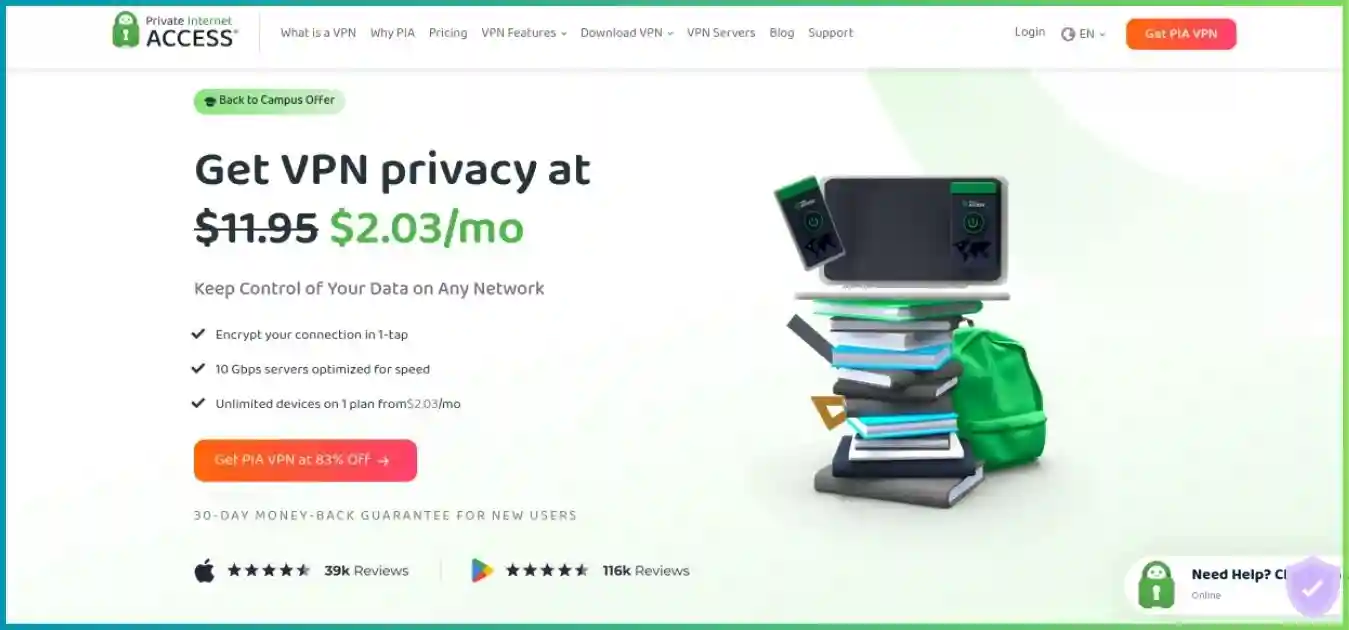
PIA is a US-based service owned by Kape Technologies. Its standard subscription supplies the VPN network and supported app controls; optional Dedicated IP and antivirus purchases have their own pricing and scope. Public app code, a RAM-only fleet claim and repeated independent assurance are meaningful parts of its privacy case.
Strengths: household device flexibility, cost over a long term, desktop app and subnet routing, and supported forwarding. Tradeoffs: no comparable permanent free tier, fewer listed countries than Proton, and narrower mobile/TV feature parity. An advanced desktop menu does not imply the same tools exist on iPhone.
Our Private Internet Access review explains its everyday app controls and plan choices in more detail.
Check PIA’s current offer Proton VPN
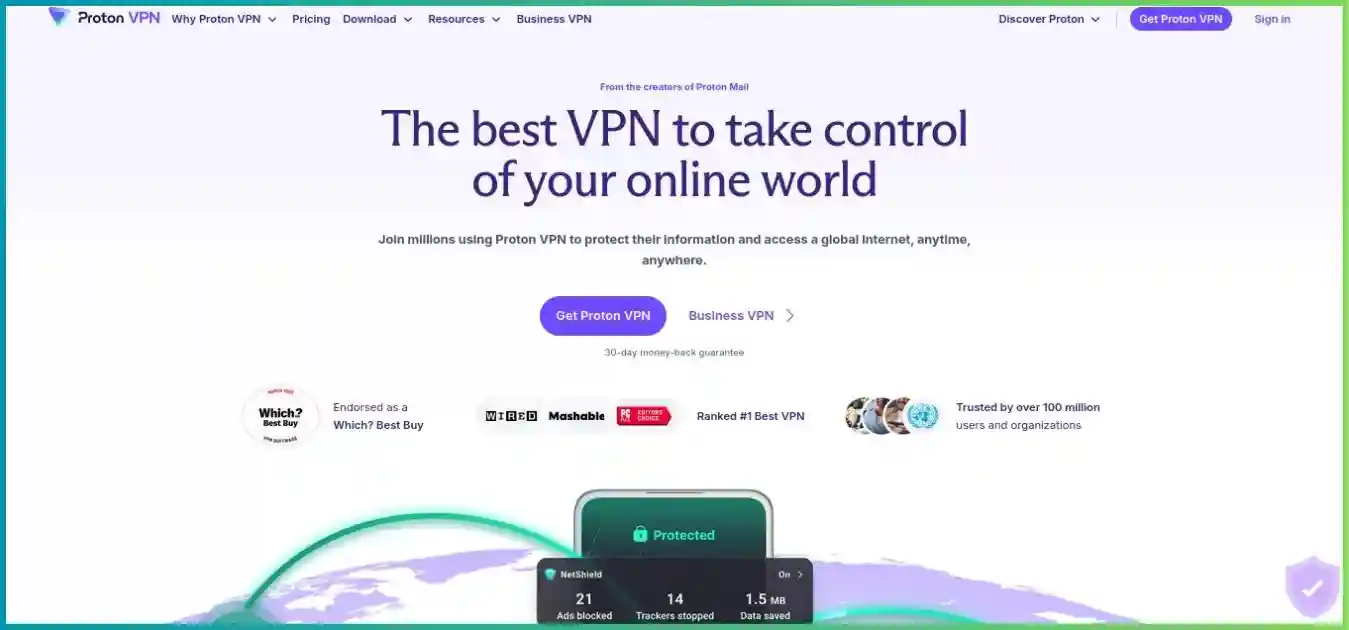
Proton VPN operates from Switzerland within the wider Proton ecosystem. VPN Plus adds location selection, paid streaming and P2P support, NetShield and Secure Core. Proton Unlimited and other bundles combine additional Proton services; their storage or email benefits should not be credited to a standalone VPN Plus subscription.
Strengths: more listed countries, public annual no-logs reports, Secure Core routing, Stealth and a usable Free plan. Tradeoffs: ten paid connections, a higher recorded renewal cost, and platform-specific restrictions aroundsplit tunneling and forwarding. Some newer Mac features remain experimental or early access.
See our Proton VPN review for a fuller explanation of Free, Plus and the broader bundles.
Compare Proton VPN plansPricing: compare the bill, covered months and renewal
PIA’s general USD purchase page confirmed its current offers. Proton’s dynamic pricing page returned incomplete numeric fields, including placeholder totals. The Proton amounts here are previously checked USD acquisition offers, clearly labeled rather than presented as a freshly confirmed cart. Taxes, currency, account status, bonus months and campaigns can change the result.
| Plan | PIA: current general USD page | Proton VPN Plus: recorded USD offer |
|---|---|---|
| Monthly | $11.95 billed monthly; renews monthly at $11.95 | $9.99/month recorded; confirm current amount |
| One year | $47.88 for 12 months; $3.99 equivalent | $47.88 for 12 months; $3.99 equivalent |
| Long introductory term | $79 for 39 months; $2.03 equivalent | $71.76 for 24 months; $2.99 equivalent |
| Long-offer renewal | $79 every 36 months; about $2.19 equivalent | $83.88 for 12 months in checked checkout; $6.99 equivalent |
| One-year renewal | $47.88 every year | Confirm in the specific annual cart; do not assume the two-year offer’s renewal |
| Free alternative | No ongoing free plan | Proton Free: $0, with important restrictions |
| Optional extras | Dedicated IP/antivirus priced separately | Larger Proton bundles and business products priced separately |
Long-offer first charge
USD snapshots for unequal terms: PIA 39 months; Proton Plus 24 months. Tax/add-ons excluded.
Annualized renewal cost
Calculated annual equivalents from recorded renewal terms. PIA is charged for three years at once, not $26.33 annually. Proton’s amount is a previously checked offer; confirm its current cart.
$83.88/year in recorded checkout
$79 billed every three years
Proton’s recorded first payment is $7.24 smaller, but PIA’s covers fifteen more months. PIA therefore has the lower monthly equivalent for these long offers. The renewal columns annualize different billing cycles: PIA’s $26.33 is $79 divided by three years, while Proton’s recorded $83.88 is a one-year bill. The annualized difference is about $57.55; PIA is still charged $79 at renewal, not $26.33.
A longer discount is useful only if you keep using the service
Paying for three years can be sensible for a household that has already checked its apps and routes. It is less attractive if youneed a VPN only for a short trip or are unsure about compatibility. A monthly plan costs more per month but keeps the commitment small. Proton Free can establish whether the basic app works on your device, although it cannot establish Plus streaming or forwarding behavior.
Save the final checkout’s initial total, covered period, next billing date and renewal amount before purchasing. A displayed “per month” price on a long plan is an equivalent, not an installment arrangement. Keep bundle upgrades and add-ons separate when comparing costs; also check whether existing Proton services already supply the VPN entitlement you need.
Proton Free: useful protection with deliberate limits
Proton Free offers unlimited data, no advertising and one active VPN connection. It is supported by paid subscriptions rather than a short trial countdown. The app first selects the fastest available free server for your location; it does not let you freely choose any country from the paid network.
| Requirement | Proton Free | Proton VPN Plus |
|---|---|---|
| Data and connection slots | Unlimited data; 1 connection | Unlimited data; 10 connections |
| Country selection | App-selected servers across 10 free countries | Paid directory with country/city/server choices |
| Change server | Random next server; cooldowns | Manual paid-network selection |
| Streaming/P2P features | Not the paid streaming/P2P feature set | Supported paid routes; check service/server |
| NetShield and Secure Core | Not included | Included with eligible routes/apps |
| Port forwarding | Not included | Supported paid P2P setups |
The current free-server guide lists the Netherlands, Japan, Romania, Poland, Norway, Switzerland, Singapore, Mexico, Canada and the United States. Requesting a change selects another server randomly. The first change has a 45-second cooldown, followed by ten-minute intervals for additional changes. Repeated changes are not a dependable substitute for manual country selection.
Free is a good fit for ordinary browsing, public Wi-Fi and trying the interface without paying. For a particular streaming country, inbound P2P connections or Secure Core, evaluate Plus instead. PIA’s refund-backed paid purchase also differs from an ongoing free account: payment and a timely refund request are involved.
Protocols, kill switches and leak protection
Both services support established encrypted VPN protocols, but app menus differ by platform. PIA emphasizes WireGuard and OpenVPN, with more OpenVPN configuration options on desktop. Proton’s current apps broadly use WireGuard UDP/TCP, Stealth and Smart Protocol, while Linux and manual configurations retain additional OpenVPN paths. An old all-platform protocol list can be misleading.
| Control | PIA | Proton VPN |
|---|---|---|
| Core protocol choices | WireGuard/OpenVPN on supported apps; platform differences | WireGuard UDP/TCP, Stealth, Smart Protocol; Linux/manual OpenVPN |
| Blocked-network approach | Supported OpenVPN proxy Multi-Hop and manual settings | Stealth and automatic protocol selection on supported builds |
| Kill switch | Standard/advanced behavior on supported apps | Standard/advanced or OS-specific behavior; verify platform |
| DNS controls | PIA DNS/MACE/custom options; desktop routing controls | Proton DNS/NetShield/custom options; platform-specific |
| Extra-hop route | VPN plus proxy | Secure Core VPN entry plus exit |
| Post-quantum layer | No comparable shipped app feature established | Planned groundwork; not established as shipped |
Proton Protocols is a connection architecture, not a universal new cipher
Proton’s Windows release notes introduced Proton Protocols in stable version 5.1.5 in July 2026. Stable 5.1.8 in September included split-tunneling and IPv6 fixes. Some other support pages still use beta wording, so availability should follow the exact platform and release channel. Neither a new architecture nor a post-quantum roadmap establishes that quantum-resistant VPN protection has shipped everywhere.
Check protection during reconnection and everyday interruptions
A kill switch can block unintended traffic when the tunnel drops; stricter modes may also prevent browsing before the VPN connects. Check sleep/wake behavior, Wi-Fi-to-mobile switching, captive portals and restart behavior on the devices you actually use. PIA’s adjustable OpenVPN settings can help compatibility, but changing encryption without understanding the setting is unnecessary for most users.
IPv6 handling also depends on the app and route: a provider may tunnel supported IPv6 traffic or block it to avoid exposure. Native apps, browser extensions and manual configurations do not automatically share every DNS, kill-switch or routing safeguard. We have not established a leak-test winner from a marketing checklist.
Privacy: independent evidence, public code and legal context
Both providers have more substantial evidence than an unaudited no-logs slogan. PIA announced its third Deloitte Audit Romania engagement in February 2026, following earlier reviews in 2022 and 2024. It addressed infrastructure configuration, operational and incident processes, management systems and token-based Dedicated IP controls under ISAE 3000 (Revised). The full report is available publicly.
Proton’s June 2026 publication presents its fifth consecutive annual Securitum no-logs infrastructure assessment and links to the current and previous reports. Its production apps are open source, with separate client-security review history. PIA also publishes production app code. App inspectability and server-side assurance address different trust questions; one does not replace the other.
| Evidence | PIA | Proton VPN |
|---|---|---|
| Independent review | Third Deloitte Romania infrastructure engagement | Fifth annual Securitum infrastructure assessment |
| Report access | Public full report | Public current and historical reports |
| Client code | Open-source production apps | Open-source production apps |
| Infrastructure disclosure | RAM-only fleet claim | Secure Core entry control; do not assume a RAM-only global fleet |
| Legal context | United States; Kape ownership; transparency history | Switzerland; Proton VPN request transparency |
| Limits | Point-in-time scope; account/billing data remain | Point-in-time scope; account/billing data remain |
US versus Swiss jurisdiction is relevant to legal procedures and your threat model, but it is not a complete privacy ranking. PIA has disclosed prior court cases in which it could not supply activity logs and publishes transparency material. Proton’s current VPN transparency report likewise describes legally approved requests it could not fulfill with identifying connection records. These are historical evidence and provider disclosures, not promises about every future scenario.
A no-activity-logs commitment does not mean the provider has no account, subscription, payment or voluntarily supplied support information. A VPN also cannot erase cookies, account logins or browser fingerprints. The EFF’s VPN selection guidance explains why provider trust and the problem you want to solve matter. For browser identity questions, read our VPN, proxy and anti-detect browser comparison.
Speed, latency and gaming: route quality matters
There is no controlled Mbps or ping dataset behind this update. Both providers advertise high-capacity infrastructure, and both support modern protocols. A 10 Gbps server link is capacity shared across traffic, not a promise that your home connection will reach that throughput. ISP routing, server load, distance, protocol and your device can change results substantially.
For streaming and downloads
Start with a nearby ordinary server and a supported modern protocol. Try another nearby city if congestion persists. Compare sustained throughput and buffering rather than one brief speed-test peak; extra proxy or Secure Core hops should be enabled for a specific need.
For gaming and calls
Prioritize ping, jitter, packet loss and session stability. A distant exit can worsen matchmaking or call quality even when download speed looks strong. VPN routing sometimes changes a poor ISP path, but it does not automatically lower latency.
Proton Plus offers Moderate NAT for peer-connectivity problems on supported desktop and mobile platforms. It reduces mapping randomization, which the provider describes as a small privacy tradeoff. It cannot be combined with Proton port forwarding and is not a universal guarantee of an “open” console NAT state. PIA’s forwarding helps only applications and eligible routes that can use the assigned port.
For a useful personal comparison, keep the device, connection type, destination and time window similar; measure without the VPN, then repeat with each ordinary route. Also reconnect after sleep and check the real game or video call. Our gaming VPN guide explains how to assess latency and connection features.
Server coverage: more countries versus detailed US choices
PIA’s current directory headline lists 104 countries and all 50 US states. Older graphics still show 91 countries, and its directory warns that recent expansion can leave the detailed table behind. We use the current headline with that limitation, rather than repeating the older figure or asserting a dependable total server count.
Proton’s checked directory lists 149 countries, 196 locations and 20,799 total servers, including 17,984 Plus servers and 125 Secure Core servers. Secure Core covers 68 exit countries. These figures move independently and should not be treated as counts of unique physical machines or directly comparable accounting units.
Advertised paid-country coverage
October 2 directory snapshots. Country choice is broader on Proton; totals do not measure speed or physical fleet size.
| Network detail | PIA | Proton VPN |
|---|---|---|
| Country coverage | 104 headline; some older directory assets lag | 149 paid countries |
| Locations | All 50 US states; current global location total not established | 196 locations listed |
| Server totals | No dependable current count established | 20,799 total / 17,984 Plus; changing snapshot |
| Infrastructure | RAM-only and 10 Gbps fleet claims | 10 Gbps-capable network; specialized Secure Core entry infrastructure |
| Virtual locations | Some virtual locations; inspect chosen route | Do not equate an advertised country with physical placement |
| Practical fit | US regional choice and broad general coverage | Wider international country choice |
Proton has 45 more listed countries in these snapshots. PIA’s US state selection can be more useful if your actual need is a regional US endpoint. For either provider, confirm the particular city, feature and physical or virtual location of interest. Server quantity alone says little about congestion, redundancy, peering or the performance of your chosen route.
Streaming: paid plans, native TV apps and service rules
Both paid services support streaming use, but we have not verified a current success rate for Netflix, Disney+, Prime Video or any other catalog. Proton Free is not a substitute for Plus’s supported streaming locations. An exit that works for one app or region can behave differently elsewhere, and service restrictions can change.
| Device or setup | PIA | Proton VPN |
|---|---|---|
| Android TV | Native app; supported TV controls | Native app; paid streaming and TV split rules |
| Apple TV | Native app for tvOS 17+ | Native app for tvOS 17+ |
| Amazon Fire OS | Documented Android-based Fire OS app path | Current Fire OS 7+ app path |
| Newer Vega OS Fire Stick | Native compatibility not established in reviewed material | Separate native Vega OS app launched September 2026 |
| TV/console without an app | Compatible VPN router or separate Smart DNS | Compatible VPN router/shared VPN setup |
| Extra-hop mode | Proxy Multi-Hop can reduce performance | Secure Core not recommended for speed-sensitive streaming |
Check Fire TV’s operating system before downloading
Amazon’s newer Vega OS devices are different from Android-based Fire OS models. Proton now documents separate installation paths, including its September 2026 Vega OS release. An Android APK is not installable on Vega OS. This makes the actual operating system a more useful compatibility check than the words “Fire TV Stick” alone.
Smart DNS and encrypted VPN access are separate
PIA offers a separate Smart DNS setup for compatible devices. It changes supported DNS behavior without supplying the encryption and IP protection of a VPN tunnel; device registration and service availability need checking. A router tunnel encrypts traffic leaving the router, but attached devices share its exit and router-level settings. Prefer a native app when it supplies the required features.
Netflix’s VPN viewing guidance says VPN viewing can be limited to globally licensed titles, with restrictions for ad-supported plans and live events. Review your service’s rules and assess your own device before committing. Our streaming VPN guide covers app and TV setup choices.
Torrenting and port forwarding: both have useful paid paths
For lawful P2P transfers, both providers offer supported paid routes and VPN-side forwarding. This is a closer comparison than PIA versus a provider that offers no ordinary forwarding. The deciding factors are your operating system, eligible region, client configuration and ability to keep the assignment active.
| Requirement | PIA | Proton VPN |
|---|---|---|
| Eligible route | Supported non-US regions | Paid P2P-marked server |
| App/manual availability | Compatible apps and documented manual scripts | Windows/Linux GUI, Linux CLI, early-access macOS; manual OpenVPN/WireGuard |
| Assigned port | Can change; maintain forwarding lease | Usually changes after reconnect; update client |
| Keep-alive behavior | Manual script must maintain binding | Manual NAT-PMP setup needs its documented maintenance |
| Important combination | Check app/protocol/region compatibility | Cannot combine with Moderate NAT |
| Free tier | No permanent free tier | Forwarding/P2P feature set not included in Free |
PIA’s current Linux script guide explicitly excludes US regions and warns that closing the script can let forwarding expire after fifteen minutes or less even while the VPN stays connected. Proton’s current guide supports Windows and Linux app workflows plus early-access macOS forwarding. Its manual configurations use NAT-PMP; a working tunnel alone does not establish a working inbound mapping.
Configure the client as carefully as the VPN
Enter the assigned port in your P2P client, update it after reconnection when needed, and bind the client to the VPN interface where supported. A kill switch adds protection during interruption, but correct interface binding helps prevent the client from selecting another network path. Proton specifically recommends disabling the torrent client’s router UPnP/NAT-PMP option to avoid conflicting automatic mappings.
An open port allows inbound traffic to the listening application, so keep that application updated and expose only what you need. A port checker can show “closed” when no application is listening even if the mapping exists. Forwarding may improve peer reachability; it cannot guarantee faster downloads or remove your responsibility for lawful use. See our torrenting VPN comparison for the broader feature checklist.
Advanced features: routing, filtering and specialized tools
PIA Multi-Hop and Proton Secure Core solve different routing problems
PIA’s supported desktop Multi-Hop pairs OpenVPN with a Shadowsocks or SOCKS5 proxy hop. Its documented outbound arrangement is device → proxy → VPN → internet. It is not two full VPN-server tunnels, and standalone SOCKS5 does not provide encryption by itself. The combined VPN configuration still uses a protected tunnel.
Proton Secure Core sends traffic through controlled entry infrastructure in Switzerland, Sweden or Iceland before the selected VPN exit. It is designed to reduce reliance on the exit alone in higher-risk situations. This extra route increases distance and can reduce throughput; it is unnecessary for ordinary browsing on a nearby server when that additional protection is not part of your threat model.
Split tunneling: read the platform column
| Platform | PIA | Proton VPN paid plans |
|---|---|---|
| Windows | App and IPv4/IPv6 address/subnet bypass; DNS routing choices | Include/exclude apps and IPs; compatible with kill switch |
| macOS | Desktop app/subnet controls; extension permission required | Experimental app exclusion; WebKit/Safari limitations |
| Linux | Desktop app/subnet controls and DNS routing choices | Official GUI include/exclude apps; distro/build limitations |
| Android | Per-app controls | Supported app/IP routing controls |
| iOS/iPadOS | Do not assume desktop app-rule parity | General native app split tunneling not established |
| Browser/TV | Separate extension/TV capabilities; check exact app | Extension domain rules and Android TV include/exclude apps |
Proton’s Mac exclusions require WireGuard or Stealth and a network extension. Safari and other WebKit apps can remain routed through the VPN or interact unexpectedly because networking processes are shared. Proton’s guide also says split tunneling conflicts with kill-switch modes on most platforms, with Windows an explicit exception. PIA has more documented desktop IP/subnet and DNS rule flexibility, but excluded traffic deliberately travels outside the tunnel.
MACE versus NetShield
Both are primarily domain filters for ads, trackers and known malicious destinations. PIA MACE requires an active supported VPN connection; its separate iOS Safari content blocker has different scope. Proton NetShield is included in paid plans and now matches subdomains as well as root domains. Android’s Private DNS can override NetShield, so its setting should be Off or Automatic when you want Proton’s filtering.
NetShield’s adult-content option is platform/build-dependent: current setup help describes Windows, while Android release notes also record adult-content filtering. Do not assume identical controls across every app. Neither NetShield nor MACE scans arbitrary downloads, removes every video advertisement or replaces device antivirus. A false positive may require temporarily changing filtering settings to complete a legitimate task.
Stealth, Tor routes and add-ons
Proton’s Stealth and Smart Protocol give supported apps additional options when a network blocks conventional VPN traffic. PIA’s proxy-assisted OpenVPN route and configuration controls can serve compatibility needs, but neither provider can promise access through every filtering system. Choose a supported route rather than assuming a protocol label applies to a router or browser extension.
Proton currently documents Tor over VPN on paid Tor-marked servers. It routes supported traffic into Tor but is slower and does not provide all Tor Browser’s browser-level defenses; the Tor path supports TCP rather than arbitrary UDP traffic. PIA’s Dedicated IP is a separate paid option for consistent-IP access, not proof of greater anonymity. A stable address and account logins can make activity easier to associate.
Apps, devices and everyday usability
Both cover major desktop and mobile systems with native apps, plus documented TV and manual/router paths. PIA’s unlimited simultaneous paid connections are the clear household advantage if you routinely exceed ten active devices. Proton Plus’s ten slots can be enough for most smaller setups; Free’s single slot is a different proposition. Installations are not the same as simultaneous connections.
PIA’s best everyday fit
Users who want compact connections plus deeper desktop controls, many active household devices and precise local-network exclusions. Start with defaults, then configure the rule or forwarding feature you actually need.
Proton’s best everyday fit
Users who want a free starting point, a broad country menu and clearly labeled P2P/Secure Core/Tor routes. Existing Proton subscribers should check whether their bundle already includes the paid VPN before buying again.
Mac users should verify extension permissions and experimental-feature limits. Linux users should confirm distribution, architecture and official package availability; Proton’s current GUI split rules are not available in every unofficial package. PIA documents Linux desktop controls and manual scripts, while Proton now documents both GUI and CLI features. Headless and desktop setups require separate evaluation.
For local printers, casting and home media, check LAN access before assuming a broken app. A router can protect multiple attached devices, but all share its selected exit, and router support does not automatically reproduce native-app filtering or kill-switch behavior. Browser extensions protect browser traffic within their documented scope, rather than every application on the computer.
Support, cancellation and refund terms
PIA advertises 24/7 chat and email support alongside app/manual setup help. Proton documents priority support and live chat for paid accounts, with help-center and contact options for other users. We did not measure wait times or resolution quality, so an invented support-response chart would not help you choose.
| Topic | PIA | Proton VPN |
|---|---|---|
| Contact options | Advertised 24/7 chat/email; setup guides | Paid priority support/live chat; help center/contact |
| Ordinary guarantee | 30-day offer for new subscribers | Eligible initial purchase; cancellation/request within 30 days |
| Renewal nuance | Published terms also address initial purchase and/or renewal; exclusions apply | Initial-purchase wording; do not assume renewal eligibility |
| Payment limitations | Channel and payment/repeat-purchase rules apply | Cash/bank transfer excluded; once-per-user rule |
| Store purchases | Store terms/process may apply | Apple refund through Apple; Google Play guidance differs |
| Canceling renewal | Separate from a refund request | Separate from a refund request; Plus ends at cycle expiry |
Proton’s current general terms describe a full refund for an eligible initial purchase when both cancellation and the request occur within thirty days. They exclude cash/bank transfers and limit refund requests to once per user. This is different from prorated account credit when changing a paid plan; do not repeat older blanket claims that the initial guarantee only refunds unused days.
PIA’s checkout says the guarantee is for new subscribers, while its published terms also discuss initial purchases and/or renewals with exclusions. Confirm applicable eligibility instead of promising or excluding all renewal refunds. With either provider, identify your billing channel, save the invoice and submit an explicit refund request within the relevant window. Turning off automatic renewal alone is not a refund request.
What the charts establish—and what they cannot
The visuals compare recorded first payments, annualized renewal terms and advertised country coverage. They support specific conclusions: PIA’s checked long plan has a lower effective monthly cost, and Proton lists more paid countries. They do not establish a market-share ranking, a privacy score or a measured speed advantage. Unlimited devices are described in text rather than converted into a fabricated numerical bar.
| Comparison | Supported conclusion | Limitation |
|---|---|---|
| Initial bills | Recorded Proton bill is $7.24 lower | PIA covers 15 additional months; Proton needs fresh cart confirmation |
| Monthly equivalents | PIA $2.03 versus recorded Proton $2.99 | Unequal prepaid terms; rounded calculations |
| Annualized renewal | PIA about $26.33 versus recorded Proton $83.88 | Actual renewal bills are $79/3 years and $83.88/year |
| Country coverage | Proton lists 45 more countries | Advertised country definitions; virtual/physical placement varies |
| Privacy evidence | Both publish external assessments and app code | Audit counts do not translate to a security percentage |
| Speed/streaming | No controlled winner established | Depends on app, route, service and local connection |
Final verdict: choose for your real devices and routes
PIA is our value and customization recommendation. Its current long offer, unlimited connections and desktop rule flexibility fit large households and users who maintain their own network configuration. It also has substantial public privacy evidence. Its smaller advertised country footprint matters only if a missing or unsuitable location affects your use.
Proton VPN is our broader-country and specialized-privacy recommendation. Secure Core, Stealth, annual public assessments and Free are useful distinctions. Paid forwarding is also credible competition for PIA. Its higher recorded renewal and ten-device limit are practical costs to weigh, while newer Mac and TV features should be judged by their actual release status.
| Your priority | Preferred fit | Why |
|---|---|---|
| Many simultaneous devices | PIA | Unlimited paid connections |
| Lower recorded long-term cost | PIA | Lower monthly equivalent and annualized renewal |
| Desktop app/subnet/DNS routing | PIA | More documented granular controls |
| Free browsing protection | Proton Free | Unlimited data without a subscription bill |
| Broader international coverage | Proton VPN Plus | 149 versus 104 listed countries |
| Controlled-entry multi-server privacy | Proton VPN Plus | Secure Core entry/exit architecture |
| Newer Vega OS Fire TV | Proton VPN | Separate documented native app |
| Lawful P2P forwarding | Either, after platform check | Both have paid eligible routes and changing port assignments |
| Public code and external assurance | Both | Substantial evidence; compare report scope |
| Fastest speed or guaranteed streaming | No winner established | Needs current route/device testing |
For another comparison with Proton’s privacy tools, see ExpressVPN versus Proton VPN. Our ExpressVPN versus Surfshark comparison adds another established unlimited-device alternative.
If you also want NordVPN’s specialty features, compare PIA versus NordVPN and Proton VPN versus NordVPN. Use the same device, budget and route requirements across each shortlist.
Frequently asked questions
Research methodology and sources
Updated October 2, 2026 using provider purchase pages, server directories, subscription terms, privacy-assessment announcements and current app help. PIA’s general USD checkout was readable. Proton’s public pricing response contained incomplete numeric fields, so its acquisition and renewal amounts remain explicitly labeled previously checked offers rather than interpreted placeholders.
Current checks covered PIA’s 104-country directory and third Deloitte announcement, Proton’s paid/free country disclosures, fifth Securitum assessment, stable Windows release notes, split tunneling, forwarding, Moderate NAT, NetShield, Tor routes and separate Fire OS/Vega OS documentation. Prior researched PIA desktop, forwarding, MACE and Smart DNS documentation was used with current checkout/network corrections. Proton’s general terms establish full eligible initial-purchase refunds; Android release notes prevent an overly narrow Windows-only description of adult-content filtering.
We did not conduct controlled throughput, latency, leak, streaming-success or support-response tests. Bar and column charts use recorded prices and advertised coverage, with unequal terms and annualized calculations disclosed. Recommendations assess documented features and privacy evidence. No invented speed, survey, market-share or security-score dataset is used.
Offers and features can change by account, country, app build and purchase channel. Confirm the exact cart and current compatibility before paying. A VPN does not guarantee anonymity, reduced ping or access to a particular streaming catalog.