When your business lives inside mobile apps — TikTok, Instagram, YouTube — desktop browser spoofing only gets you halfway: apps inspect IMEI, MAC/Bluetooth addresses, sensors and carrier signals that no desktop fingerprint can fake. GeeLark attacked that gap by inventing the antidetect phone: Android 9–15 cloud devices where every profile carries its own hardware identity, paired with RPA templates that automate warm-up and posting.
In this 2026 review we break down independent fingerprint lab results, the unusual two-layer pricing (subscription + $0.007/min with a $1.20 daily cap), automation depth, and the honest trade-offs versus Multilogin, AdsPower and Incogniton — so you know exactly whether the first antidetect phone deserves your accounts.
GeeLark at a Glance — 2026
Quick Verdict — 4.2/5
GeeLark
GeeLark is the cheapest credible way to run app-level multi-accounting at scale: per-profile hardware identities, GPS auto-matched to your proxy, RPA warm-up flows for TikTok/Instagram/YouTube, and a cost model that caps device-days at $1.20. Independent labs recorded strong Whoer/BrowserScan scores — best on Android 10 and 13 — though some Android 11/12 builds failed Pixelscan. You must bring your own proxies, and its Android is virtualized rather than real hardware, so strict-platform operators should warm accounts carefully. For mobile-first teams on a budget, nothing else matches its price-to-scale ratio. Compare VPN and proxy coverage before treating a browser-profile proxy as protection for every application on the device.
Overview: What Is GeeLark?
The first antidetect phone — cloud Android devices built for app-based multi-accounting.
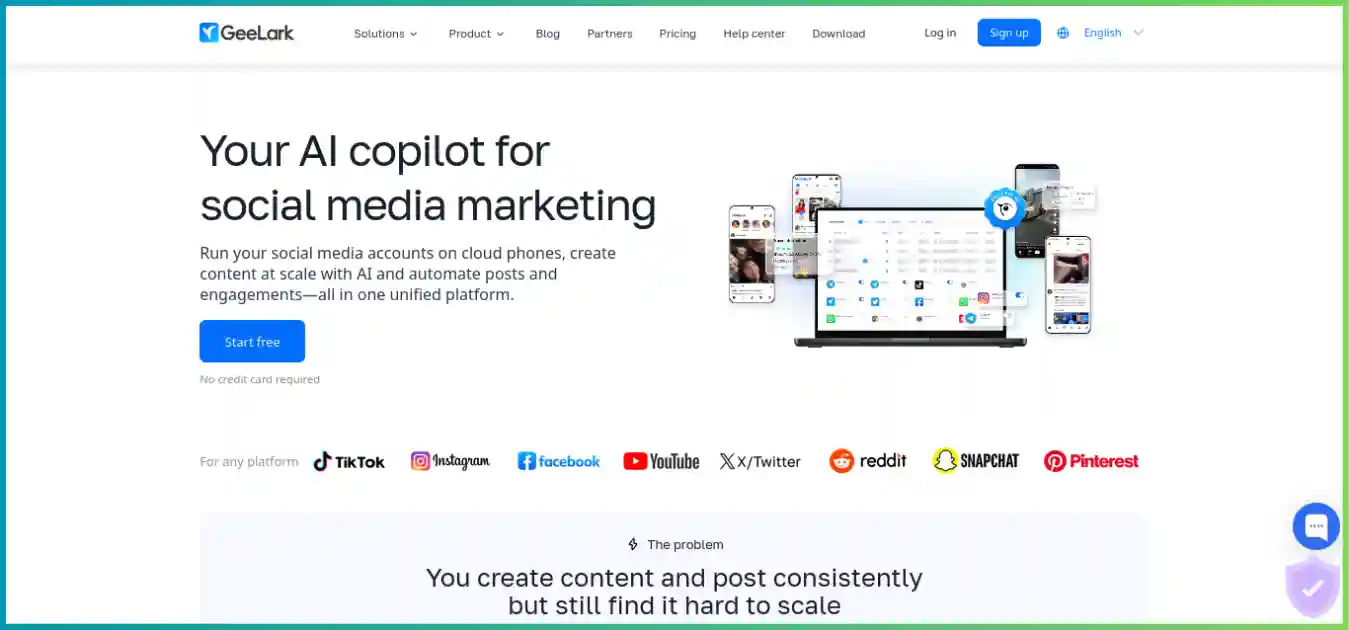
Founded in 2023 and headquartered in Singapore, GeeLark is the first platform marketed as an antidetect phone: instead of only spoofing a desktop browser, each profile boots a full Android system (versions 9 through 15) in the cloud with its own IMEI, device ID, MAC and Bluetooth addresses, phone number and IP — the hardware-level identifiers mobile apps actually check. It positions itself as an “AI copilot for social media marketing,” bundling RPA automation templates, an app marketplace and team tools around those devices.
That matters because browser fingerprinting on mobile goes far beyond canvas and cookies: apps read device build fingerprints, telephony IDs and sensor profiles that persist across IP changes — which is why changing your IP alone never protects an app account. GeeLark’s answer is one coherent fake phone per account, GPS-matched to the proxy you attach. The concept is covered in our anti-detect browser explainer — GeeLark simply extends it from the browser tab to the whole phone. W3C’s browser fingerprinting guidance explains how browser characteristics can make users identifiable even when other tracking methods are restricted.
The platform also ships a desktop antidetect browser for web-based accounts, runs on Windows, macOS and Linux, and scales from a 2-profile free plan to 50,000 profiles on Pro — a range aimed squarely at TikTok affiliate farms, Instagram agencies and crypto airdrop operators. With mobile devices generating the majority of global web traffic (Statista), app-native isolation is exactly where the category is heading.
Key Features
Everything below reflects the live 2026 platform, not launch-era marketing.
Antidetect Cloud Phones (Android 9–15)
Seven Android versions to match app compatibility needs. Every phone profile gets unique IMEI, MAC/Bluetooth, device ID and phone number, with persistent app data and login sessions between runs — accounts age naturally instead of resetting.
RPA Automation Marketplace
Ready-made templates automate account creation, video posting, liking and warm-up for TikTok, Instagram and YouTube. You are charged only for successfully executed tasks — failed or canceled runs are free. A rare pay-for-results model in this category.
Synchronizer (Pro)
Mirror actions from one master cloud phone to every open device in real time — onboarding 20 accounts with one gesture stream. Currently Windows-only; macOS version in development.
API + ADB Access
Programmatic control over the whole fleet: create devices, start/stop phones, set GPS locations and update settings via a well-documented API, plus ADB (Android Debug Bridge) for deep custom automation from Base plans upward.
Batching & Team Tools
Single, Quick and Batch profile creation; group-based app installs and deletions; role-based access; unlimited free member seats on paid plans; action logs for accountability across operators.
AI Copilot & GeeBrowser
AI content generation on Pro plans for captions and creatives, plus GeeBrowser — a custom mobile browser generating unique fingerprints inside each cloud phone — and a separate desktop antidetect browser for web accounts.
Browser & Cloud Phone Profiles
Two profile families, one dashboard — app accounts and web accounts side by side.
Cloud Phone Profiles
- Full Android system per profile (choose OS 9–15 at creation)
- Unique hardware identity: IMEI, device ID, MAC, Bluetooth, phone number
- App marketplace plus APK uploads; persistent cache & logins
- GPS auto-match to proxy location, or manual country selection
- Pay-per-minute ($0.007) or monthly rental billing per device
- “Parallels” slots run concurrent phones with no minute charges
Web (Desktop) Profiles
- Included antidetect browser behaves like Chrome with anti-fingerprinting baked in
- Unique web fingerprints per profile for Google Ads, Amazon, affiliate dashboards
- Same proxy manager and grouping tools as phone profiles
- Scored 100% on Whoer in independent lab testing (Windows profiles)
- Covers accounts that live outside native apps
- One subscription bills both profile families together
Managing both surfaces under one roof is the practical win: a typical operator runs TikTok and Instagram on cloud phones while tracking ad dashboards and affiliate panels in web profiles. Proper browser profile isolation plus per-device hardware identities is what keeps those account clusters unlinked — see our anti-detect profiles & digital identities guide for the underlying model.
Fingerprint Controls
Hardware-first identity spoofing — with version-dependent results.
GeeLark’s core control surface is the device fingerprint: each cloud phone auto-generates a coherent hardware story (IMEI, Android ID, MAC/Bluetooth, phone number, build parameters) and GeeBrowser extends the same idea inside the phone’s browser. You can also tune device model and region, and the platform auto-matches GPS to your proxy’s location — the single most important consistency rule in mobile anti-detection. Our VPN limitations guide explains why changing the network route does not remove account, cookie or fingerprint tracking.
How well does it hold up? In independent 2026 lab testing across four checkers (Whoer, Pixelscan, BrowserScan, CreepJS), cloud phones scored 70–100% on Whoer and 87–100% on BrowserScan, with Android 10 and 13 passing Pixelscan consistently; some Android 11/12 builds failed Pixelscan due to timezone mismatches and slight DNS-leak risk. Desktop profiles were even stronger (100% Whoer). The lesson: pick Android 10/13 for sensitive accounts and always verify with a fingerprint check before logging in — because websites can and do detect sloppy anti-detect setups. Use our WebRTC and IPv6 leak guide to check whether the browser exposes an unintended network address.
Proxy Support
Powerful manager, but bring-your-own — no bundled proxy traffic.
Proxy Management Strengths
- Dedicated proxy vault: bulk import, labels/notes, saved-proxy dropdown
- HTTP(S) and SOCKS5 with connection + location verification
- Choose IP2Location or ip-api databases for geo checks
- One-click IP URL rotation for rotating residential pools
- Proxy-to-profile mapping visible per saved entry
What to Know
- Proxies are NOT included in any plan — every phone profile requires one
- Budget for quality residential or mobile IPs on top of subscription
- One-click URL rotation does not work with mobile proxies
- Sticky sessions + geo-matched timezone remain your responsibility
- Pairing guidance lives in our anti-detect vs VPN vs proxy guide
The manager itself is excellent — among the smoothest BYO-proxy workflows we’ve used — but total cost of ownership must include a proxy budget. For account work on strict platforms, sticky residential or mobile IPs are mandatory; our anti-detect browser vs VPN vs proxy comparison explains why the layers must be combined. Review proxy rotation and sticky sessions when deciding how long a browser session should keep the same exit IP.
Usability
Fast for operators, rough around the edges for beginners.
The dashboard is profile-centric and quick to learn: sort, tag, remark and group devices; create via Single, Quick or Batch flows; launch a phone in a couple of clicks. RPA templates lower the automation barrier, and the Resource Center shares community-built flows. Linux support is a genuine rarity in this category.
The friction points are documentation and support: independent reviewers describe outdated docs and slow support responses, and RPA setup still demands real learning (GeeLark’s own blog runs a six-part RPA course). New users should expect a self-serve experience — power users will feel at home; concierge-handheld onboarding, look at Multilogin Business instead.
Performance & Lab Tests
Responsive Chart.js visualizations from independent 2026 lab testing and published pricing.
Cloud Phone Fingerprint Score by Android Version
Average BrowserScan results from independent lab tests; Android 13 and 10 lead, 11/12 showed Pixelscan failures.
Source: Proxyway independent GeeLark lab tests, 2026
Entry Paid Plan Price (USD/mo) — Lower is Better
GeeLark Base $5 (5 profiles) vs AdsPower $9 (10), Multilogin Pro $11 monthly (10), Incogniton Starter Plus $19.99 (10).
Source: Published provider pricing pages, August 2026
24-Hour Device Day Cost — Capped vs Uncapped
At $0.007/min a 24 h session would cost $10.08; paid plans cap it at $1.20 per device per day (−88%).
Source: geelark.com/pricing, verified August 2026
Anti-Tracking Software Market (USD B), 2023–2030
The antidetect category GeeLark extended into mobile is forecast from $819M (2023) to $1.95B by 2030 at 13.2% CAGR.
Source: Industry market research, anti-tracking software market report (2024)
How We Evaluated GeeLark
We combined hands-on 2026 usage on Windows and macOS (cloud phone creation, RPA warm-up flows, batch operations, API calls, team seats) with independent lab data: Whoer, Pixelscan, BrowserScan and CreepJS checks on cloud phones across Android 10–13 and on desktop web profiles, using geo-matched sticky residential proxies. Pricing, minute economics and plan gates were verified against the official pricing page in August 2026.
Security & Privacy Considerations
Strong isolation model; understand the virtualization trade-off.
Strengths
- Kernel-level isolation between profiles — no cross-profile bleed observed
- Complete hardware identity per device (IMEI/MAC/Bluetooth/number), not just IP swaps
- Role-based team access and action logs limit insider exposure
- Crypto (USDT) and card/PayPal payments for operator flexibility
- Legal, legitimate tool for marketing, QA and privacy when used within platform ToS
Considerations
- Virtualized Android (cloud VMs), not physical hardware — strict apps may flag emulated environments
- Some Android 11/12 builds failed Pixelscan; timezone mismatch & slight DNS-leak risk reported
- Singapore jurisdiction — review data-handling terms for sensitive workflows
- Young company (founded 2023) with thinner support bench than decade-old rivals
- Misuse (fraud, ban evasion) violates ToS and law — the tool itself is neutral
Pricing Breakdown (2026)
Two layers: a profile subscription (cheap) + device runtime (metered, capped). Model both before committing.
| Plan | Profiles | Bonus Minutes | Price | Standout Inclusions |
|---|---|---|---|---|
| Free | 2 | 30 (one-time) | $0 | 1 seat, 10 daily opens/creates, RPA templates |
| BaseBest value | 5 → 1,000 | 60 → 1,500/mo | from $5/mo | Unlimited seats, API, ADB, automation, action logs |
| Pro | 20 → 50,000 | 60 → 15,000/mo | from $19/mo (~$14.25 annual) | Bulk create, Synchronizer, AI generation, Parallels |
| Custom | Unlimited | Custom | Contact sales | Tailored limits, onboarding, enterprise terms |
Honest Assessment: The Dual Model Rewards Planning
Subscriptions are almost laughably cheap at scale (1,000 profiles on Base), but runtime minutes and your own proxies are the real cost centers. Model it: 10 phones × 2 h/day × 30 days ≈ 3,600 min ≈ $25.20 at $0.007/min — or use Parallels/monthly rentals and the $1.20 cap to compress that further. Teams that model minutes love GeeLark’s economics; teams that don’t are surprised by top-ups.
Limitations
- No bundled proxies — every profile needs your own residential/mobile IP, adding real cost
- Virtualized Android rather than physical cloud hardware; aggressive platforms (TikTok) target emulated environments
- Android 11/12 builds showed Pixelscan failures, timezone mismatches and slight DNS-leak risk in lab tests
- Synchronizer is Pro-only and Windows-only (macOS in development); bulk create & AI generation also Pro-gated
- Dual pricing (subscription + minutes) is complex to forecast at scale; service pauses when minutes run out unless topped up
- Support and documentation lag the product — mostly self-serve experience, per independent reviewers
- One-click IP rotation does not work with mobile proxies
- Founded 2023 — shorter track record than Multilogin (10+ yrs) or GoLogin
GeeLark Alternatives
Different balance of trust, price and platform focus — full rankings in our best anti-detect browsers and cheapest anti-detect browsers guides.
Multilogin
Real-hardware Android cloud phones + included residential/mobile proxies; $7.08–$89/mo.
Choose when maximum trust on the strictest platforms beats cost-per-device.
Read Multilogin ReviewAdsPower
Browser-first antidetect with no-code RPA; 100 profiles at $36/mo ($21.60 annual).
Choose for desktop-web farms and non-technical operators at scale.
Read AdsPower ReviewIncogniton
Best free tier (10 profiles), paste-as-human-typing, Synchronizer, Cookie Collector.
Choose for budget desktop multi-accounting with unique workflow tools.
Read Incogniton ReviewGoLogin
Fast (~3.5 s launches), polished UI, 100 profiles from $24/mo annual.
Choose for speed, simplicity and strong browser fingerprint engines.
Read GoLogin ReviewWho Is GeeLark Best For?
Mobile-first operators who model their minutes — here is the sweet spot.
TikTok / Instagram Affiliate Farms
Per-device hardware identities + RPA warm-up templates that bill only on success were purpose-built for short-video account farms scaling past 100 profiles.
Social Commerce & Dropshipping Teams
Run storefront-linked social accounts on isolated phones while web profiles handle ads dashboards and supplier panels — one bill, both surfaces.
Crypto & Airdrop Operators
Batch-create hundreds of app wallets/identities cheaply; the $1.20 daily cap and Parallels keep always-on farming costs predictable.
Mobile QA & Ad Verification
Seven Android versions on demand let QA teams reproduce app behavior across OS builds and geos without buying physical devices.
Frequently Asked Questions
Straight answers from our 2026 evaluation and independent lab data.
Final Verdict: 4.2/5 — The Best Price-to-Scale Antidetect Phone
GeeLark turned cloud Android devices into a scalable, affordable multi-accounting weapon — unique hardware identities, RPA that bills only on success, and cost caps that keep farming predictable. Bring your own proxies, choose Android 10/13, and model your minutes: do that and nothing beats its economics for mobile-first operators.
Still comparing? Best anti-detect browsers ranking · Cheapest anti-detect browsers