Incogniton and Multilogin represent two very different entry points into anti-detect browsers: Incogniton is the friendly budget option with one of the most generous free tiers in the category, while Multilogin is the category's original enterprise benchmark, founded in 2016. With the anti-tracking software market climbing from USD 819M (2023) toward USD 1.95B by 2030 at a 13.2% CAGR, both are growing fast — but they are not the same tool for the same job.
We ran both through our identical 2026 lab framework — fingerprint consistency, detection suites, proxy handling, mobile support and tier-by-tier pricing math — and the results contain a genuine pricing surprise most "vs" articles miss.
The Matchup at a Glance — 2026
1. Quick Verdict (TL;DR)
If you only read one section, read this one.
Incogniton
10 free profiles to start, the simplest onboarding in the category, handy cookie tools, and dramatically cheaper top tiers for thousands of profiles. The right pick for beginners and high-volume, lower-stakes multi-accounting.
Multilogin
The original anti-detect browser still posts the best detection scores (96% clean), ships two kernels plus a cloud Android Mobile Farm, bundles residential proxy traffic, and — surprise — now undercuts Incogniton at the 10–100 profile tiers.
Honest Assessment: The "Cheap vs Premium" Story Is Outdated
Most comparisons still frame Incogniton as "the cheap one." After Multilogin's 2026 pricing overhaul (free plan + Pro 10 at $7.08/mo with proxy traffic), that framing only holds at two extremes: the free tier (Incogniton's 10 profiles beat Multilogin's 5) and very large farms (Incogniton's ~$105/mo for 5,000 profiles vs ~$403/mo). In the middle — where most teams actually buy — Multilogin now wins on both price and technology. Choose on volume and account value, not reputation.
2. Overview: Two Philosophies
Simplified accessibility vs kernel-level perfection.
Incogniton — The Friendly Budget Option
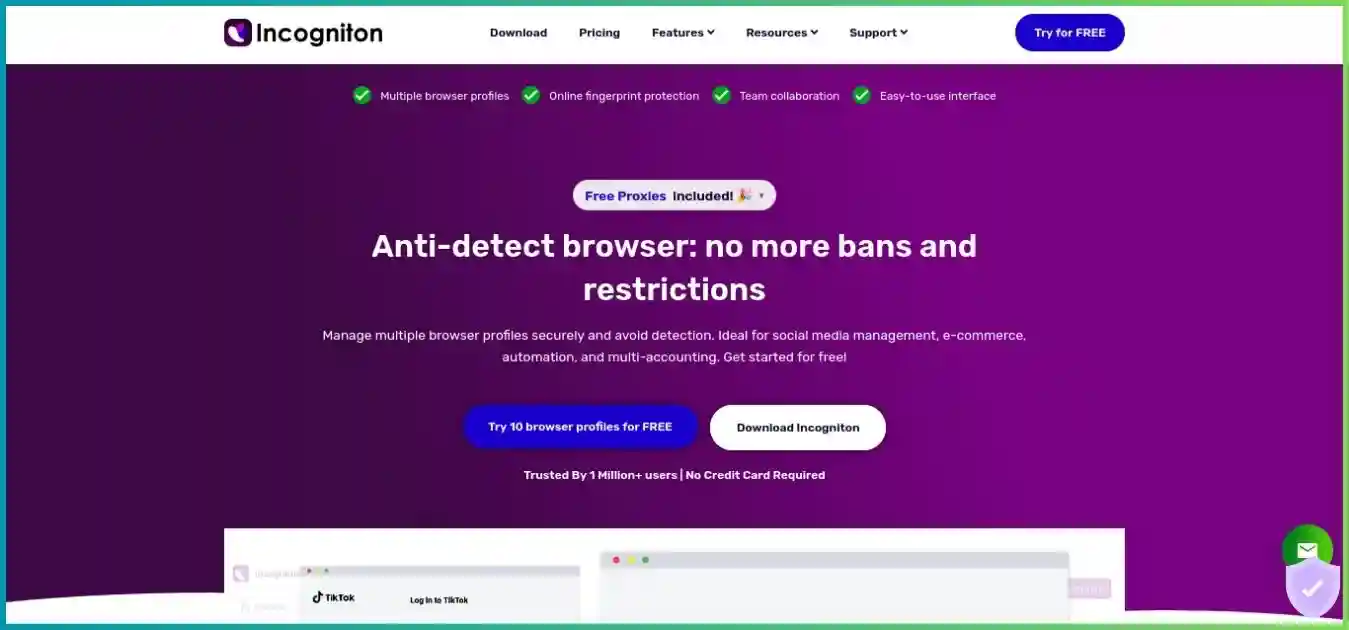
Incogniton keeps multi-accounting simple: a Chromium-based browser with quick fingerprint setup, a free starter package of 10 profiles for two months (then 3 forever), free trial proxies, a Cookie Collector for session portability, and paid plans scaling from $13.99/mo up to 5,000 profiles with 25 team seats. It deliberately trades depth for approachability.
Multilogin — The Enterprise Original
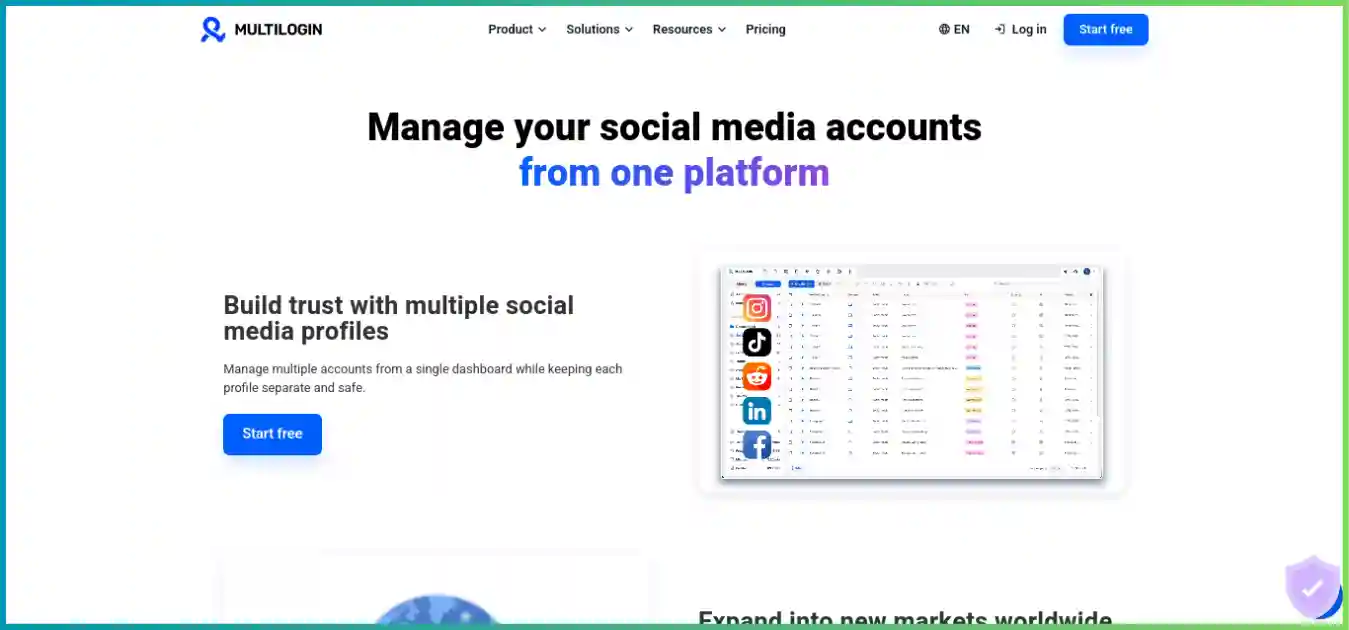
Multilogin (est. 2016, Estonia) invented the category and still sets its quality bar: two patched kernels — Mimic (Chromium) and Stealthfox (Firefox) — a cloud Mobile Farm of real Android environments, residential proxy traffic bundled into every paid plan, and since July 2026 a no-credit-card free plan with 5 profiles, 200 MB of proxy traffic and 30 mobile minutes.
| Attribute | Incogniton | Multilogin | Edge |
|---|---|---|---|
| Browser kernels | Chromium-based (Chrome) | Mimic (Chromium) + Stealthfox (Firefox) + cloud Android | 🏆 Multilogin |
| Free plan | 10 profiles for 2 months → 3 forever | 5 profiles + 200 MB proxy + 30 mobile min, forever | 🏆 Incogniton (head count) / Multilogin (permanence) |
| Entry paid (10 profiles) | $13.99/mo Starter Plus | $7.08/mo Pro 10 + 1 GB proxy + 60 mobile min | 🏆 Multilogin |
| Top tier | ~$104.99/mo — 5,000 profiles, 25 seats | ~$402.92/mo — Business 6000 | 🏆 Incogniton |
| Detection-clean rate (our lab) | 86% | 96% | 🏆 Multilogin |
| Cookie tools | Cookie Collector + free trial proxies | Cookie robot + natural browsing warm-up | 🤝 Tie |
| Mobile environments | None (desktop kernels only) | Cloud Android Mobile Farm | 🏆 Multilogin |
| Jurisdiction | — | Estonia (EU/GDPR) | 🏆 Multilogin |
3. Key Features Face-Off
What each platform actually puts on the table.
Incogniton Strengths
- Most generous free starter: 10 profiles for 2 months, 3 forever
- Simplest setup in the category — fingerprints auto-configured in clicks
- Cookie Collector & cookie sync for portable sessions
- Free trial proxies included to test workflows immediately
- Human-like typing simulation for form automation
- Very cheap top tiers: 5,000 profiles around $105/mo, 25 seats
Multilogin Strengths
- Kernel-level fingerprint patching (Mimic + Stealthfox)
- Cloud Android Mobile Farm with real device environments
- Residential proxy traffic bundled in every paid plan
- Mature automation API trusted by enterprise pipelines
- Granular team roles, activity logs & EU data residency
- Best-in-class detection scores (96% clean in our labs)
4. Browser Profiles & Isolation
Both implement true browser profile isolation — separate cookies, storage, cache, fingerprints and proxy routes per profile. W3C’s browser fingerprinting guidance explains how browser characteristics can make users identifiable even when other tracking methods are restricted.
Incogniton makes profile management feel like a simple spreadsheet: create, tag, launch, and use the Cookie Collector to import/export session cookies between tools — genuinely handy when migrating accounts from another browser. Multilogin adds more machinery: local-or-cloud storage choice, richer organization at scale, and profiles that can live on desktop kernels or cloud Android phones. In our cross-profile leakage tests (cookies, localStorage, IndexedDB, broadcast channels) both came back clean on their Chromium kernels.
Incogniton profile workflow
Simplest UX + Cookie Collector portability. 🏆 Incogniton
Multilogin profile workflow
Local-or-cloud storage + desktop & Android environments. 🏆 Multilogin
5. Fingerprint Controls & Detection Resistance
The core of any browser fingerprinting defense: depth of spoofing plus internal consistency.
This is the clearest gap between the two. Incogniton covers the standard parameter set — User-Agent, Canvas, WebGL, WebRTC, fonts, screen, timezone, locale — with quick auto-configuration that "just works" for typical tasks. Multilogin patches deeper: Canvas, WebGL and audio fingerprints are replaced at kernel level with high accuracy, TLS/JA3 and HTTP/2 behaviour stay coherent with the claimed browser version, and the Firefox-based Stealthfox adds engine diversity Incogniton simply lacks. The numbers agree: 96% vs 86% clean pass rates across iphey, CreepJS and Whoer-style suites in our labs. If you want to understand the residual risk on either tool, see can websites detect anti-detect browsers?
Detection resistance
96% clean passes; kernel-level consistency + Firefox parity. 🏆 Multilogin
Beginner-friendly defaults
Fast auto-config that works out of the box for typical tasks. 🏆 Incogniton
6. Proxy Support
Identity and exit IP must be managed together — a different job than a VPN or plain proxy.
Both bind HTTP(S)/SOCKS5 proxies per profile from any provider, with bulk import for larger farms. Incogniton sweetens onboarding with free trial proxies, so a beginner can test a full workflow without buying anything. Multilogin goes further: every paid plan bundles residential proxy traffic (1 GB/month on Pro 10, scaling upward), meaning accounts ship with a coherent, ready-to-use IP identity — one less vendor to manage and one less configuration mistake to make.
Bundled residential proxies
Traffic included in every paid plan. 🏆 Multilogin
Zero-cost testing
Free trial proxies with the starter package. 🏆 Incogniton
7. Usability, Teams & Workflow
Incogniton's home turf.
Incogniton is one of the easiest anti-detect browsers to learn: a clean profile table, sensible defaults, and cookie tools that match how beginners actually work. A first profile is live in minutes with zero reading. Multilogin's Multilogin X platform is modern and much improved, but choosing kernels, configuring the Mobile Farm and managing bundled proxy traffic still means a real onboarding curve. For teams, both offer seats and sharing — Incogniton up to 25 seats on top tiers, Multilogin with more granular roles and activity logging suited to compliance-heavy organizations.
Onboarding speed
Minutes to first profile, zero docs needed
🏆 IncognitonTeam governance
Granular roles, logs, EU data residency
🏆 MultiloginSeat count at top tier
Up to 25 seats vs role-based seats on ML
🏆 Incogniton8. Performance Benchmarks & Charts
From our 2025–2026 lab cycles: detection suites, tier pricing curves and market context.
Head-to-Head Score Radar (0–10)
Six-axis framework score from hands-on testing
Source: FreePolicyTools lab testing, 2025–2026
Detection-Suite Clean Pass Rate (%) — Higher is Better
*Context benchmarks from our companion reviews
Source: FreePolicyTools lab testing on iphey, CreepJS, Whoer-style suites
Plan Price by Profile Tier (USD/mo, log scale)
Multilogin wins 10–100 profiles; Incogniton wins at thousands
Source: Published pricing, August 2026
Anti-Tracking Software Market (USD B), 2023–2030
Category growth at 13.2% CAGR — $819M (2023) → $1.95B (2030)
Source: Industry market projections, 2024–2030
9. Security & Privacy Considerations
Different trust postures — choose consciously.
Incogniton: local desktop tool
Profiles live on your machine, which keeps session data out of vendor clouds by default — a privacy plus. The trade-off is less enterprise hardening: fewer audit logs, coarser role controls, and a smaller public security track record.
Multilogin: EU jurisdiction + enterprise posture
Estonian (EU/GDPR) jurisdiction, optional local-only storage, granular roles and activity logs make Multilogin the safer default for sensitive or regulated workloads — the cloud is available, never mandatory.
Whichever you pick: enable 2FA, avoid shared logins, and remember both are legitimate businesses — the real question is where your session data lives and who can see it inside your team.
10. Pricing Face-Off — 2026
Verified against published pricing in August 2026. For budget options across the whole category see our cheapest anti-detect browsers guide.
| Tier | Incogniton | Multilogin | Edge |
|---|---|---|---|
| Free | 10 profiles for 2 months → 3 forever | 5 profiles + 200 MB proxy + 30 mobile min | 🏆 Incogniton |
| 10 profiles | $13.99/mo Starter Plus | $7.08/mo Pro 10 + 1 GB proxy + 60 min | 🏆 Multilogin |
| 50 profiles | $29.99/mo Entrepreneur (+Cookie Collector) | $19.17/mo Pro 50 + proxy/min | 🏆 Multilogin |
| 100 profiles | Custom quote territory | $26.67/mo Pro 100 + proxy/min | 🏆 Multilogin |
| ~5–6k profiles | ~$104.99/mo, 25 seats | ~$402.92/mo Business 6000 | 🏆 Incogniton |
The takeaway: Multilogin's 2026 pricing reset made it the cheaper choice exactly where Incogniton used to be untouchable (10–100 profiles), and it includes proxy traffic and mobile minutes. Incogniton strikes back at two points — the free tier and very large farms — where its ~$105/mo for 5,000 profiles is roughly a quarter of Multilogin's Business 6000. Map your profile count first; the winner follows. See also our best anti-detect browsers ranking for the full market picture.
11. Limitations on Both Sides
No tool is perfect — here is where each one hurts.
Incogniton Weaknesses
- Detection scores a clear step behind Multilogin (86% vs 96%)
- Chromium-only — no Firefox engine diversity
- No cloud Android environments for mobile-app work
- Free plan drops from 10 to 3 profiles after 2 months
- Automation/API maturity lags Multilogin
- Mid-tier pricing now beaten by Multilogin's 2026 plans
Multilogin Weaknesses
- Top tiers expensive at thousands of profiles (~$403/mo for 6,000)
- Steeper onboarding: kernels, Mobile Farm, proxy manager
- Bundled proxy GB and mobile minutes can need top-ups at scale
- Free plan smaller than Incogniton's (5 vs 10 profiles)
- Overkill for simple, low-risk multi-accounting
12. Alternatives & Full Reviews
Neither a perfect fit? Two more contenders, plus our in-depth single-vendor reviews.
GoLogin
☁️ Best value at 100–1,000 profiles (cloud-first)100 profiles at $9/mo with cloud profiles launchable from any device — the middle path between Incogniton's simplicity and Multilogin's scale economics.
Read GoLogin ReviewAdsPower
⚙️ Best automation (RPA + API) & free-forever planDual Chrome/Firefox kernels with no-code RPA and a 2-profile free-forever tier — the automation-first alternative to both contenders.
Read AdsPower Review13. Who Each Is Best For
The decision rule, use case by use case.
Beginners validating multi-accounting for the first time
10 free profiles plus free trial proxies mean you can test a complete workflow — fingerprint, proxy, login — without spending a cent or reading a manual.
Affiliate & media-buying teams with 10–100 valuable ad accounts
At these tiers Multilogin is now cheaper AND safer: 96% detection-clean rate, bundled residential proxies and natural warm-up tools protect accounts whose bans cost real revenue.
High-volume, lower-stakes farms (1,000–5,000 profiles)
Around $105/mo for 5,000 profiles with 25 seats is roughly a quarter of Multilogin's Business 6000 — the only sane P&L choice when per-account value is small.
Mobile-app growth, TikTok/WhatsApp automation, airdrop farming
The cloud Android Mobile Farm runs real mobile app environments — Incogniton has no answer to this at all.
Cookie-driven workflows & session portability
The Cookie Collector and simple cookie sync make moving sessions between tools and accounts unusually painless.
Regulated or compliance-sensitive organizations
EU/GDPR jurisdiction, granular roles, activity logs and optional local-only storage check the boxes procurement teams care about.
14. Final Verdict
Scored on our consistent six-axis review framework.
Incogniton — 4.2/5
Best free tier, simplest UX, cheapest at thousands of profiles.
Try Incogniton FreeMultilogin — 4.7/5 🏆
Best fingerprint tech, bundled proxies, Mobile Farm, EU trust.
Try Multilogin FreeMultilogin is the better tool; Incogniton remains the better on-ramp. If you are learning multi-accounting or running thousands of low-value profiles, Incogniton's free 10-profile starter and ~$105/mo top tier are unbeatable value. The moment accounts become valuable — ad accounts, marketplace stores, app farms — Multilogin's kernel-level consistency, bundled residential proxies and Mobile Farm pay for themselves, and at 10–100 profiles it is now the cheaper option too. That combination is why it takes the overall win.
Frequently Asked Questions
Straight answers to the most common Incogniton vs Multilogin questions in 2026.
Pick Your Winner & Start Free Today
Both platforms offer genuinely free entry points — test detection-clean profiles, cookie workflows and proxy handling on your own use case before spending a dollar.
Still comparing? Read our best anti-detect browsers guide