The best VPN for humanitarian workers is not a consumer pick with a discount — it is a tool that must survive the harshest internet environments on earth. Humanitarian teams operate where Access Now documented a record 282 internet shutdowns across 35 countries, where Freedom House found online rights declined in 27 of 72 countries it tracks, and where aid workers face record levels of violence — around 280 killed in a single year, the deadliest on record (Aid Worker Security Database). In that context, a VPN protects beneficiary data, incident reports, and staff communications on hostile networks.
We ranked Proton VPN, ExpressVPN, NordVPN, Surfshark, SafeShell, and PIA on verifiable trust, stealth protocols, shutdown resilience, and team value — and we exclude CyberGhost, IPVanish, and CometVPN, which fail this threat model. For wider context see our best VPNs for restrictive countries guide.
Below are three quick humanitarian VPN picks from our rankings, selected for verifiable trust, rapid deployment, and field security.

Proton VPN
Proton VPN is the best VPN for humanitarian workers in 2026 because it is the only major provider whose trust model can be independently verified end to end: open-source...

ExpressVPN
ExpressVPN is the deployment-speed champion: hand a device to any staff member and it protects them without a single settings decision, because obfuscation is automatic on...
NordVPN
NordVPN is the layered-defense choice for humanitarian operations: obfuscated servers and the DPI-resistant NordWhisper protocol handle censorship, while Double VPN and Onion...
Key Humanitarian Digital-Risk Statistics
Why Field Teams Need a Different Class of VPN
Humanitarian data is high-value: beneficiary identities, incident reports, and staff safety depend on the tunnel.
Surveillance & Data Seizure
- Hostile actors and some state agencies monitor NGO communications
- Device searches at checkpoints can expose unencrypted sessions
- RAM-only servers and no-logs policies leave nothing to seize
- Encryption in transit is baseline digital protection guidance for aid workers
Shutdowns, Throttling & Selective Blocking
- A record 282 internet shutdowns were documented across 35 countries
- Partial shutdowns target platforms, protocols, and regions selectively
- Stealth protocols and alternative routing keep tunnels alive under filtering
- Pre-downloaded configs matter when provider sites are blocked
Mixed-Skill Team Deployments
- Field teams include medics, logisticians, and local staff — not IT admins
- Zero-config obfuscation (ExpressVPN) removes the weakest link: configuration
- Unlimited-device plans (Surfshark, PIA) cover whole office fleets cheaply
- 24/7 support matters across time zones during incidents
Duty of Care & Donor Requirements
- Data-protection obligations extend to beneficiary and staff data in transit
- Audited providers (Proton, Nord, Express, Surfshark) simplify compliance evidence
- Open-source clients (Proton, PIA) let security staff verify claims themselves
- Jurisdiction matters when governments demand user data
Honest Assessment: A VPN Is One Control, Not a Security Program
No VPN defeats a total internet shutdown, and no VPN replaces endpoint protection, encrypted messaging, or your organization's security management. In some countries VPN use itself is restricted or criminalized — coordinate with your security officer, host-country agreements, and local counsel before deployment. This guide ranks tools by technical merit for humanitarian contexts; operational decisions remain yours. Pair any choice here with digital protection training and an incident plan for connectivity loss.
What Matters in a Humanitarian VPN
Six filters we applied before any provider entered this ranking — the humanitarian threat model is stricter than consumer reviews.
Verifiable Trust
Open-source clients and repeated independent audits beat trust-me marketing. When you carry beneficiary data, your security team must be able to verify the no-logs claim and the code.
Stealth Under DPI
Crisis-context networks inspect and block VPN traffic. Obfuscation — Stealth, NordWhisper, Camouflage, QUIC-wrapping, or automatic — is a hard requirement, not a nice-to-have.
Jurisdiction & Data Minimization
Switzerland, Panama, and the BVI outrank Five/Nine Eyes members when governments demand data. RAM-only servers and kill switches ensure nothing persists or leaks.
Resilience During Shutdowns
Partial shutdowns filter by protocol and platform. Multiple protocol options, TCP/443 fallback, and alternative routing decide whether coordination continues or stops.
Team & Budget Realities
NGO budgets are donor-funded. Unlimited-device plans, long-term discounts, and a free emergency tier (Proton) stretch each dollar across the whole fleet.
Deployment Simplicity
Field onboarding happens fast with mixed technical skill. Zero-config clients, offline installers, and pre-deployment configuration packs prevent gaps.
Best VPNs for Humanitarian Workers — 2026 Comparison
Only providers with credible stealth and verifiable trust are ranked for this audience.
| VPN | Stealth | Open Source | Audited No-Logs | Free Option | Entry Price | Rating |
|---|---|---|---|---|---|---|
Proton VPN 🏆 Best Overall | Stealth | Free / $2.99/mo | ||||
ExpressVPN 🥇 Deployment Speed | Automatic | $2.79/mo | ||||
NordVPN 🛡️ Layered Security | Obfuscation + NordWhisper | $3.09/mo | ||||
Surfshark 👥 Team Fleets | NoBorders + Camouflage | $2.49/mo | ||||
SafeShell 🕵️ Harsh Censorship | Stealth (QUIC) | $1.86/mo | ||||
PIA 🛠️ Open-Source Value | None | $2.03/mo |
Feature-by-Feature Comparison for Field Work
| Feature | Proton VPN | ExpressVPN | NordVPN | Surfshark | SafeShell | PIA |
|---|---|---|---|---|---|---|
| DPI-Resistant Stealth Protocol | ||||||
| Open-Source Clients | ||||||
| Independent No-Logs Audits | ||||||
| Multi-Hop / Hardened Routing | ||||||
| RAM-Only Servers | ||||||
| Free Emergency Tier | ||||||
| Unlimited Devices | ||||||
| Alternative Routing (DNS/IP Blocks) | ||||||
| Network-Wide Malware/Phishing Block | ||||||
| 24/7 Live Chat Support |
Benchmarks, Trust & Shutdown Charts
Responsive Chart.js visualizations from our 2025–2026 testing and published humanitarian-risk research.
Stealth Resilience Score (0–100) — Higher is Better
Composite of obfuscation depth, protocol options, and blocked-network recovery
Source: FreePolicyTools lab testing, 2025–2026
Trust & Transparency Score (0–100) — Higher is Better
Audits, open-source status, jurisdiction strength, and data-minimization design
Source: FreePolicyTools assessment from published audit reports, 2025–2026
Lowest Long-Term Price (USD/mo) — Lower is Better
NGO budgets are donor-funded; every ranked VPN stays at or under $3.09/mo long-term
Source: Published provider pricing, September 2026
Internet Shutdowns Documented Per Year
From 182 in 2021 to a record 282 in 2023 — the operating environment keeps worsening
Source: Access Now KeepItOn annual shutdown reports
Testing Methodology
Each VPN was evaluated through a humanitarian lens during 2025–2026: stealth resilience against DPI-style filtering, protocol fallback behavior, alternative routing under DNS poisoning, multi-hop options, kill-switch reliability, audit and open-source documentation, jurisdiction analysis, and fleet pricing. We weighted verifiable trust higher than in consumer rankings because field teams handle beneficiary data and staff safety information. Pricing verified September 2026. Use our VPN protocol guide to compare the connection options before choosing an app or router configuration.
Detailed Humanitarian VPN Reviews
In-depth analysis of every ranked provider's stealth capability, trust model, and field value.
Proton VPN
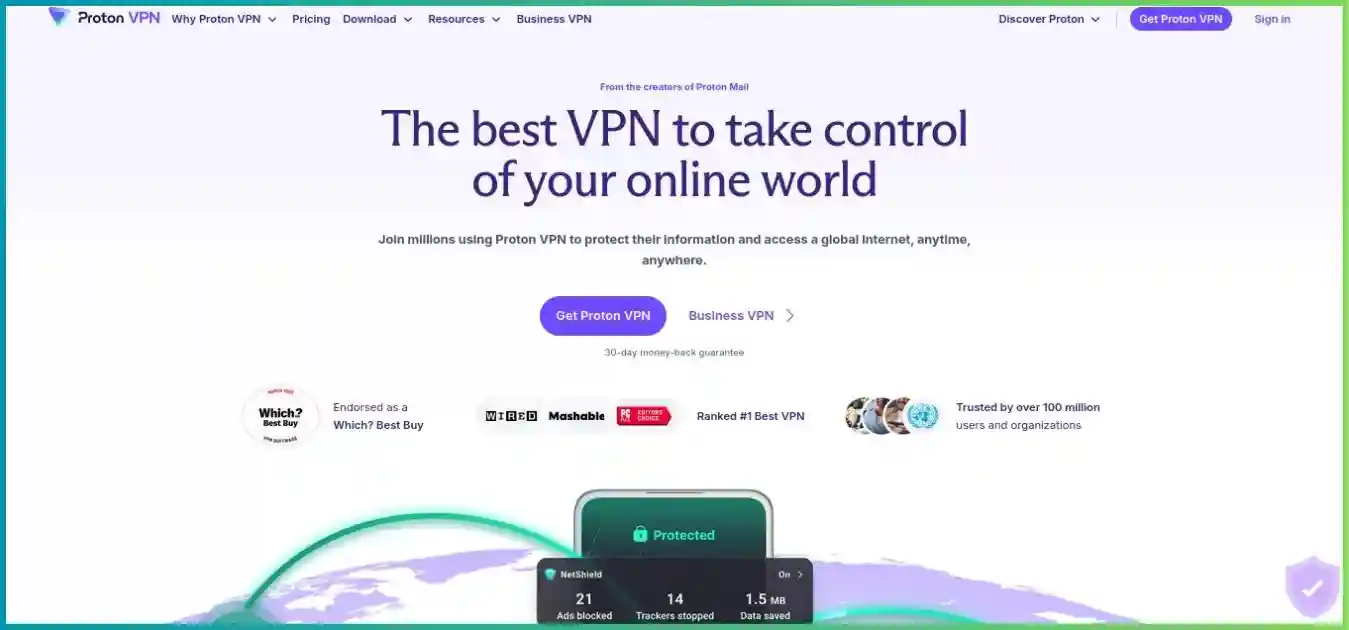
🏆 Best VPN for Humanitarian WorkersProton VPN is the best VPN for humanitarian workers in 2026 because it is the only major provider whose trust model can be independently verified end to end: open-source clients, repeated independent audits, and Swiss jurisdiction. For teams handling beneficiary data, incident reports, and sensitive communications, "we audited the code ourselves" beats any marketing claim. Stealth defeats censorship DPI, Secure Core adds a hardened multi-hop layer for high-risk sessions, alternative routing recovers from poisoned DNS, and the free unlimited-data tier gives every team member an emergency fallback at zero budget. No other VPN in this ranking combines that verifiable trust with genuine anti-censorship capability.
Pros
- Open-source, independently audited clients — field teams can verify exactly what runs
- Swiss jurisdiction with the strongest privacy legal framework in this ranking
- Stealth protocol wraps VPN traffic in obfuscated TLS to defeat DPI and blocking
- Secure Core multi-hop routes traffic through hardened data centers before exit
- Only genuinely free tier: unlimited data, no ads, no logs — an emergency fallback
- Alternative routing defeats DNS poisoning and IP blacklists on hostile networks
Cons
- No live chat — email support only
- Stealth is slightly less consistent than ExpressVPN's automatic obfuscation
- Free servers are limited to a few countries
ExpressVPN
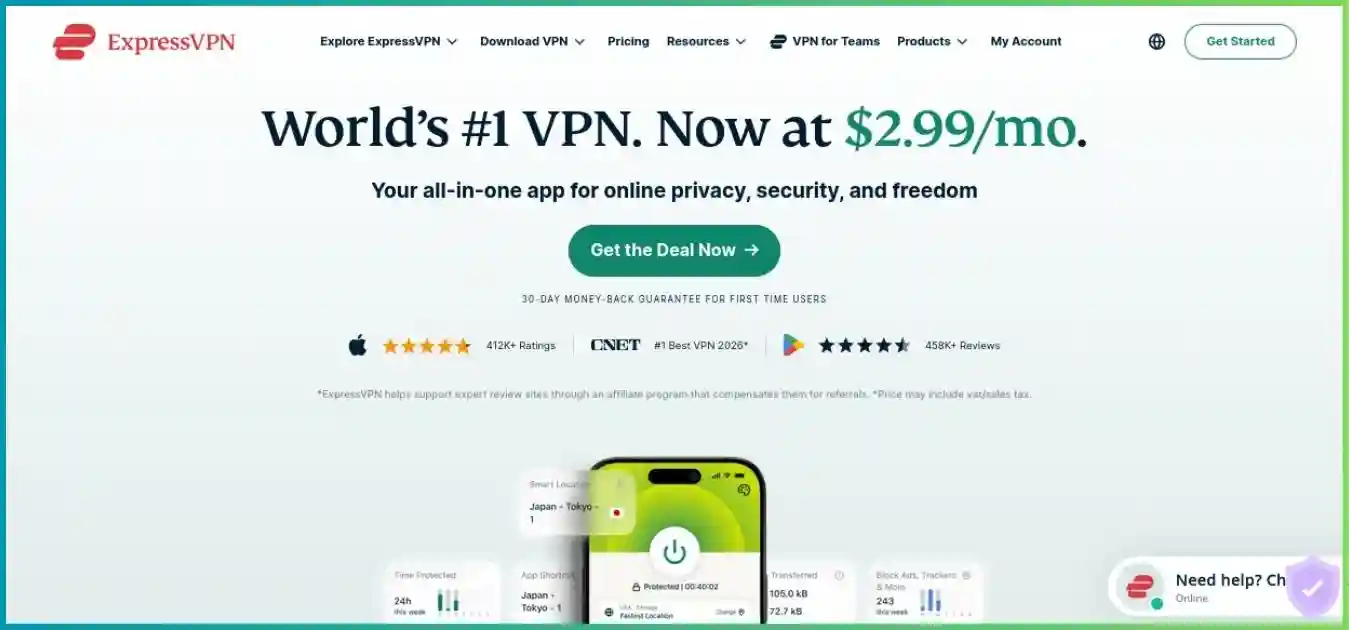
🥇 Best for Deployment Under PressureExpressVPN is the deployment-speed champion: hand a device to any staff member and it protects them without a single settings decision, because obfuscation is automatic on every protocol. That matters enormously in humanitarian contexts where onboarding happens under time pressure and technical skill varies across the team. RAM-only TrustedServers leave nothing to seize at checkpoints, the BVI jurisdiction sits outside surveillance alliances, and Lightway recovers instantly when field connectivity stutters. If Proton is the auditor's pick, ExpressVPN is the field coordinator's pick.
Pros
- Obfuscation runs automatically — zero configuration for non-technical field staff
- TrustedServer RAM-only infrastructure: no data persists to seize or leak
- British Virgin Islands jurisdiction outside surveillance alliances
- Lightway reconnects instantly across unstable field and hotel networks
- 24/7 live chat that can walk staff through hostile-network setups
- Works reliably in China, the Gulf, Russia, and Turkey — common transit hubs
Cons
- No multi-hop mode for extra session hardening
- No free emergency tier
- Closed-source clients (mitigated by independent audits)
NordVPN
🛡️ Best Layered Security BundleNordVPN is the layered-defense choice for humanitarian operations: obfuscated servers and the DPI-resistant NordWhisper protocol handle censorship, while Double VPN and Onion Over VPN add hardened multi-hop routing for the sessions where the threat model demands it. Independent audits, Panama jurisdiction, and network-wide Threat Protection Pro make it the most complete security bundle in this ranking — the right answer when your security officer asks for defense in depth rather than a single control.
Pros
- Two obfuscation paths: classic obfuscated servers plus DPI-resistant NordWhisper
- Double VPN and Onion Over VPN add layered routing for sensitive sessions
- Independent no-logs audits and Panama jurisdiction
- Threat Protection Pro blocks malware and phishing at the network level
- Meshnet secures file transfers between team devices without cloud storage
- Post-quantum encryption rollout protects long-lived confidential records
Cons
- Feature density requires a short onboarding for field teams
- No free tier
- Best extras sit on higher-priced tiers
Surfshark
👥 Best for Team Device Fleets on a BudgetSurfshark is the fleet pick for humanitarian organizations running many devices on tight budgets: unlimited simultaneous connections mean one $2.49/month subscription covers the entire field office — laptops, phones, tablets, and shared duty devices. NoBorders handles restrictive networks automatically, Camouflage hides the tunnel from DPI, and MultiHop adds double-server routing when a session deserves extra caution. The trade-offs for this audience are closed-source clients and a Nine Eyes jurisdiction — acceptable for general operations, less ideal for your most sensitive data flows.
Pros
- Unlimited simultaneous devices — cover every phone, laptop, and field tablet
- NoBorders auto-detects restrictive networks and switches to bypass servers
- Camouflage disguises OpenVPN traffic as regular HTTPS
- MultiHop double-server mode available for sensitive connections
- CleanWeb blocks malware and tracker domains network-wide
- Cheapest full-featured option at $2.49/mo — kind to NGO budgets
Cons
- No open-source clients for independent verification
- Netherlands jurisdiction sits inside the Nine Eyes alliance
- No free emergency tier
SafeShell
🕵️ Best for Harsh Censorship EnvironmentsSafeShell is the specialist for the hardest environments: its Stealth protocol wraps traffic in QUIC so aggressive firewalls see what looks like normal web browsing — the exact design that survives crackdowns in censored states. Humanitarian teams stationed where mainstream VPNs get blocked keep SafeShell as their resilient second option. The trade-off is a thinner public audit record, so we rank it as a specialist supplement rather than a primary trust anchor, and recommend pairing it with an audited provider for your most sensitive communications.
Pros
- Stealth wraps VPN traffic in QUIC so it appears like ordinary web browsing
- Purpose-built for the most aggressive censorship regimes on earth
- Lightweight WireGuard-variant core keeps speeds usable on poor field links
- Free trial plus the cheapest annual pricing in this ranking ($1.86/mo)
- Apps for Windows, macOS, iOS, Android, and TV platforms
- Strong fallback when mainstream providers are blocked during crackdowns
Cons
- Limited public audit history compared with Proton or NordVPN
- 5-device cap per plan
- Smaller support organization
Private Internet Access
🛠️ Best Open-Source Value for Admin DevicesPIA earns its place on open-source transparency and price: fully auditable clients, a no-logs record tested in court, unlimited devices, and $2.03/month make it an excellent workhorse for NGO admin fleets — logistics laptops, inventory tablets, low-sensitivity reporting devices. Its weaknesses define its role: no obfuscation and US jurisdiction mean it should never carry your most sensitive communications in hostile environments. Used correctly — as cheap, verifiable coverage for lower-risk devices — it is outstanding value.
Pros
- 100% open-source apps — verifiable by your own security staff
- Unlimited devices at $2.03/mo — the cheapest auditable fleet coverage
- No-logs policy proven in real court proceedings
- MultiHop mode adds a second hop for selected connections
- MACE blocks ads, trackers, and malware domains
- Port forwarding supports field-office services and file workflows
Cons
- No obfuscation — not suitable where VPN traffic is actively blocked
- US jurisdiction (CLOUD Act exposure) — keep sensitive data on Proton/Nord
- Speeds trail the WireGuard-class leaders
Also Considered — But Not Fit for Humanitarian Use
Three providers fail at least one hard requirement of this audience — stealth, jurisdiction, or verifiable trust. They remain fine for consumer use; they are excluded here.
CyberGhost
Not field-ready
CyberGhost has no obfuscation, so DPI-equipped networks can identify and block its tunnels. Streaming convenience is its strength; surviving hostile filtering is not in its toolkit.
Visit CyberGhostIPVanish
Not field-ready
IPVanish combines US jurisdiction (CLOUD Act exposure) with no stealth protocol. For logistics at home it is serviceable; for beneficiary data in crisis contexts, the risk profile is wrong.
Visit IPVanishCometVPN
Not field-ready
CometVPN's obfuscation is real, but a young provider with a small review base and no published audit history cannot carry sensitive humanitarian data. Audit-backed providers win this category.
Visit CometVPNHumanitarian VPN Pricing Comparison 2026
Verified September 2026. Ask providers about NGO / non-profit pricing — many offer programs off-list.
| VPN | Best Long-Term Price | Devices | Refund / Free | Best For |
|---|---|---|---|---|
| Proton VPN | $2.99/mo (2 yr) | 10 | 30 days + free tier | Trust anchor for sensitive data |
| ExpressVPN | $2.79/mo (2 yr) | Up to 14 | 30 days | Zero-config rapid deployment |
| NordVPN | $3.09/mo (2 yr) | 10 | 30 days | Layered defense in depth |
| Surfshark | $2.49/mo (2 yr) | Unlimited | 30 days | Budget fleet coverage |
| SafeShell | $1.86/mo (1 yr) | 5 | Trial + guarantee | Censorship-crackdown resilience |
| PIA | $2.03/mo (2 yr) | Unlimited | 30 days | Auditable admin-device fleet |
Best Trust Anchor
Proton VPN — open-source, audited, Swiss, with a free unlimited-data emergency tier
Get DealBest Rapid Deployment
ExpressVPN at $2.79/mo — automatic obfuscation, RAM-only servers, 24/7 support
Get DealBest Budget Fleet
Surfshark at $2.49/mo covers unlimited team devices with NoBorders protection
Get DealMust-Have Features for Field Deployments
Six capabilities that decide whether your team stays connected and protected in a crisis context.
Obfuscation That Survives DPI
Crisis-context networks fingerprint and kill standard VPN handshakes. Stealth (Proton), NordWhisper (NordVPN), automatic obfuscation (ExpressVPN), NoBorders/Camouflage (Surfshark), and QUIC-wrapped Stealth (SafeShell) each disguise tunnel traffic as ordinary web activity — verify with TCP/443 fallback before deployment.
Alternative Routing & Fallbacks
During selective shutdowns, DNS poisoning and IP blacklists block VPN domains before tunnels even start. Alternative routing (Proton, ExpressVPN) and saved manual configuration files let teams reconnect when the obvious paths are burned.
Kill Switch + Always-On Enforcement
When a tunnel drops on a monitored network, a leak exposes everything. Enforce kill-switch settings organization-wide, test with deliberate disconnects, and disable IPv6 where unsupported. Checkpoint scenarios make this control non-negotiable.
Audits, Open Source & Jurisdiction
For sensitive data flows prefer Swiss (Proton) or Panama (NordVPN) jurisdictions and RAM-only fleets (Proton, Express, Nord, Surfshark). Open-source clients (Proton, PIA) let your security team verify behavior directly. Keep an evidence folder of audit reports for donors and data-protection reviews.
Fleet Management on NGO Budgets
Unlimited-device plans (Surfshark, PIA) cover entire field offices; Proton's free tier gives every staff member an emergency option at zero cost. Centralize account ownership with the organization, not individuals, so rotations do not strand devices.
Pre-Deployment Readiness
Install, authenticate, and test every device before crossing into the operational area — provider sites are frequently blocked on arrival. Carry offline installers, manual configs, and a written fallback procedure. Rehearse the "connection lost" drill like any other emergency procedure.
Best VPN by Humanitarian Use Case
Different operational situations need different strengths. Here is our expert guidance.
Sensitive Data & Beneficiary Protection
Open-source audited clients, Swiss jurisdiction, and Secure Core multi-hop make Proton the right tunnel for beneficiary data, incident reporting, and anything a donor data-protection review will scrutinize.
Rapid-Onset Emergency Deployments
Automatic obfuscation means every device works immediately with zero configuration — critical when teams deploy in hours and technical support is days away.
High-Threat Environments & Layered Defense
Double VPN and Onion Over VPN add hardened routing layers, NordWhisper resists DPI, and Threat Protection Pro blocks phishing aimed at stretched field staff.
Internet Shutdown & Crackdown Response
When mainstream tunnels get blocked during crackdowns, QUIC-wrapped Stealth is designed to keep blending into ordinary web traffic. Keep it as the resilient second option.
Country-Wide Office Fleets on Donor Budgets
Unlimited devices at $2.49/month covers phones, laptops, and shared duty devices across a whole country office — NoBorders and CleanWeb included.
Field Reporters & Protection-Adjacent Teams
Teams working alongside journalists or documenting abuses inherit similar threat models; Proton's verifiable trust stack matches that bar. See our journalists' guide for the full protocol.
Frequently Asked Questions
Answers to the most common humanitarian VPN questions in 2026.
Protect Your Team, Your Data, and the People You Serve
Choose the humanitarian VPN stack that fits your threat model — verifiable trust, rapid deployment, layered security, fleet value, censorship resilience, or open-source economy.
Operating in censored regions? Read our restrictive-countries VPN guide